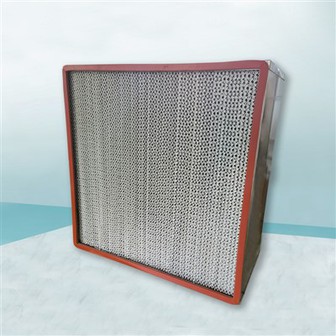
How To Judge Whether The F6 Medium Efficiency Bag Filter Can Continue To Be Used?
During routine maintenance, users can evaluate the working status of the F6 Medium Efficiency Bag Filter from three dimensions: visual appearance, equipment running conditions and real‑world purification outcomes. No professional testing instruments are needed. Reliable assessment prevents poor ventilation, weakened purification and overloaded system components caused by failed filters.
First of all, visual examination delivers fundamental judgement. A usable F6 Medium Efficiency Bag Filter keeps complete and regular overall structure. Filter bags have no tears, cracks, open seams or detachment. Bags maintain plump shapes instead of collapsing or distorting. Only light surface dust is acceptable. Severe darkening, grey caking, fibre hardening, powdering and shedding are unacceptable. No damp‑induced mould, unpleasant odour or dirt deposits should be found. Frames shall remain undeformed. Filters with torn bags, caked media, widespread mould or fibre loss must be replaced regardless of actual service duration.
Secondly, observe equipment operation to evaluate filter permeability. When a qualified filter is installed, connected ventilation, fresh‑air or air‑conditioning equipment operates steadily with sufficient and evenly distributed outflow. Symptoms including weak airflow, uneven outlet wind, loud operational noise and obvious vibration usually signal dust‑caused clogging. If performance does not recover after proper cleaning, the filter has reached end‑of‑life. Duct interiors stay clean without floating dust or reverse dust leakage when the filter works properly.

Thirdly, practical purification effect serves as the core evaluation criterion. A functional F6 Medium Efficiency Bag Filter intercepts airborne dust, lint and tiny suspended particles effectively. Surfaces indoors collect dust slowly. No heavy haze or persistent floating dust appears. Air circulates freely without stuffiness. If dust deposits build up far faster under identical running hours, indoor air stays turbid, or unpleasant stuffiness persists inside enclosed rooms, filtration performance has degraded and the filter cannot meet practical requirements anymore.
You can also refer to performance recovery after cleaning for auxiliary judgement. Serviceable filters regain satisfying air throughput and purification capability after standard dry cleaning. If airflow stays poor, dust builds up immediately and purification capability vanishes after cleaning, fibre structures have permanently deteriorated and no repair is feasible. Replace the filter promptly. Comprehensive judgement combining the above‑mentioned aspects helps maintain stable performance of ventilation‑purification assemblies and avoids equipment wear and ineffective air cleaning brought by expired filters.