


What Should Be Considered When Installing A Plate Type Primary Filter?
The installation quality of a Plate Type Primary Filter directly affects filtration performance, system airflow, and the service life of downstream filters. Therefore, inspections before and after installation should not be overlooked. Before installation, check the equipment drawings, filter specifications, and mounting frame dimensions to ensure that the filter length, width, thickness, and installation method are compatible with the system. If the filter does not match the mounting frame, it may become loose, cause air leakage around the edges, or make removal and replacement difficult. Before installation, also inspect the filter media, outer frame, sealing strips, and fasteners to ensure that they are free from damage, cracks, obvious deformation, or moisture. Filters with visible damage should not be installed directly.
During installation, pay attention to the airflow direction. Some Plate Type Primary Filter products have specific installation direction requirements and should be installed according to the product markings or technical instructions. Incorrect installation may increase resistance or reduce filtration performance. When placing the filter into the mounting frame, keep the filter media flat and avoid excessive compression, folding, or twisting. This is particularly important for pleated filter media, as the pleat spacing should remain intact and should not be compressed because of insufficient installation space. The filter should fit closely against the frame, and the sealing strips around the edges should be complete and continuous. This helps ensure that air passes through the filter media instead of bypassing it through gaps around the filter.
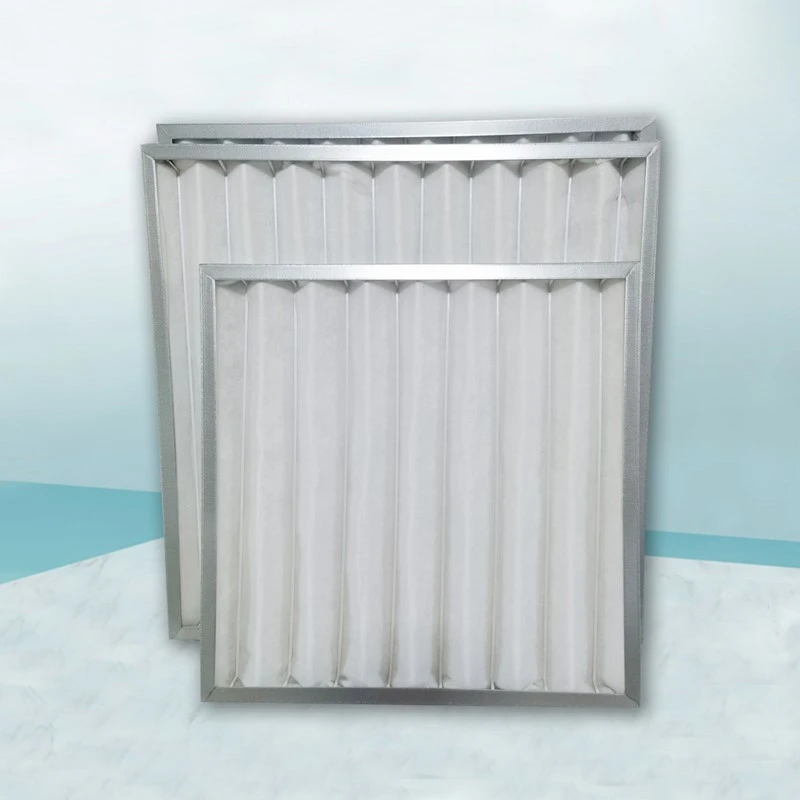
When multiple filters are installed together, pay attention to their arrangement and connections. Adjacent filters should remain properly aligned without significant height differences or displacement. Fasteners should be securely installed. For filters installed in air handling units, fresh air units, or fan systems, also inspect the access doors, clamping devices, and mounting rails. The filter must be firmly secured while remaining easy to remove during future maintenance. Sufficient maintenance space should also be provided to ensure that the filter can be removed and replaced without obstruction.
After installation, do not immediately place the system into long-term continuous operation. First, conduct an inspection and trial run. After starting the equipment, check whether the filter is loose, vibrating abnormally, leaking air, or showing signs of deformation. Also check whether the system airflow and operating noise are normal. If conditions permit, measure the pressure differential across the filter and record it as a baseline for future maintenance. If localized air leakage is detected, adjust the clamping device or reseal the affected area promptly. In systems operating in dusty environments, the installation area should also be cleaned before normal operation to prevent construction debris from quickly clogging the filter.
If the equipment is subject to vibration, make sure that the filter clamping device is secure to prevent loosening during long-term operation. Installation records should also include the filter model and specifications so that replacement filters can be purchased and maintenance can be carried out more efficiently in the future. For large systems, it is advisable to verify the pressure differential and airflow of each filtration section after installation to ensure that the operating parameters remain within a reasonable range.
In areas with high dust concentrations, the filter should be monitored more closely during the initial operating period to confirm that the filter media does not deform abnormally. The maintenance schedule can then be adjusted according to actual operating conditions. These measures can reduce the impact of improper installation on system performance and help ensure stable long-term operation of the Plate Type Primary Filter. They can also reduce maintenance risks, improve system reliability, and provide a useful basis for subsequent filter replacement and maintenance planning.