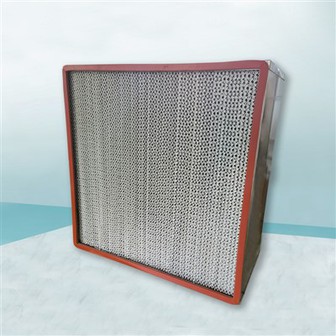
What Role Does The 2V Sub‑HEPA Filter Play in The Filtration System?
The 2V Sub‑HEPA Filter serves as a bridging intermediate filtration component in a full air‑filtration system and constitutes a critical middle link throughout the purification chain. It connects front‑end primary filtration units with downstream higher‑grade filtration units, filling performance gaps between the two and enabling gradient‑based purification logic for the entire air‑handling workflow. It prevents pollutants from striking the core downstream filtration components directly. In many ventilation and purification systems lacking this intermediate filtration stage, the full pollutant burden falls directly on downstream filter assemblies. These assemblies rapidly accumulate large volumes of contaminants, their operating conditions degrade quickly, and overall system performance suffers significant deterioration.
Most front‑end filtration units can only capture large airborne impurities. Substances such as flocculent debris and coarse suspended dust are trapped effectively, yet numerous finer suspended particulates slip past front‑end filters and travel deeper into the system along with airflow. Without interception by the 2V Sub‑HEPA Filter at this intermediate stage, these fine particles continuously advance toward downstream filter components and gradually adhere to filter‑media surfaces over time. Eventually, downstream components build up heavy soiling, system airflow deteriorates rapidly, and accumulated deposits create additional operational risks.
The 2V Sub‑HEPA Filter assumes this intermediate filtration workload. It captures fine suspended particulates missed by primary filters and substantially lowers the total pollutant volume reaching downstream filter assemblies. This protects downstream filter elements and extends the stable service life of components across the full filtration system. Under real‑world air‑circulation conditions, outside air or indoor return air first flows through pre‑filters, then passes through this filter for secondary treatment. Treated air moves onward to downstream filtration units for deeper purification before being supplied to target spaces.
Beyond protecting downstream components, the filter directly raises the cleanliness of passing airflow. In working conditions that do not demand ultra‑high‑level purification, pairing front‑end filters with the 2V Sub‑HEPA Filter meets basic site‑specific air‑cleanliness requirements without installing excessive high‑grade filter assemblies. This keeps overall ventilation‑system airflow relatively unobstructed. If high‑grade filters are deployed directly without intermediate‑stage buffering, filter surfaces become quickly covered with contaminants when exposed to particle‑laden airflow. Filtration resistance rises sharply, fan operating load increases accordingly, and overall system performance degrades noticeably.
This filter also mitigates dust and impurity buildup inside ventilation equipment cavities and air ducts. Fine particles carried by airflow will drift and settle on duct inner walls, unit housings, fan assemblies and other surfaces if left unfiltered. Thick dust deposits form over time. Once dust accumulates inside the system, equipment start‑stop cycles and airflow fluctuations can re‑suspend settled dust into supply air, triggering secondary indoor air contamination. By capturing large quantities of particulates upfront, the 2V Sub‑HEPA Filter reduces inward diffusion and deposition of dust at the source, keeps unit and duct interiors comparatively clean, and minimizes system‑related issues stemming from internal dust accumulation.
Additionally, it balances load distribution across the whole filtration system. Gradient‑filtration principles distribute pollutant‑handling pressure sequentially instead of concentrating most filtration work on a single component. Front‑end units manage coarse particles, the 2V Sub‑HEPA Filter captures abundant fine particles at the intermediate stage, and downstream units perform final deep‑level purification. Each filtration tier only processes pollutants within its functional range and avoids overloading. As a result, system‑airflow changes remain gradual rather than marked by abrupt short‑term resistance spikes, supporting long‑term stable operation of ventilation and purification hardware.
Many end‑users underestimate the value of intermediate‑filtration stages and believe front‑end plus terminal filters deliver sufficient performance. In practical operation, terminal components wear prematurely, equipment ventilation capacity declines rapidly, and internal soiling becomes commonplace precisely because this load‑sharing intermediate filter is missing. The 2V Sub‑HEPA Filter closes this functional gap. It balances air‑purification performance with overall system operational stability. It improves supply‑air cleanliness, protects other system components, reduces adverse outcomes caused by dirt accumulation, and enables ventilation‑purification systems to sustain intended performance over extended operating periods.