


What Is The Service Life Of The F9 Pocket Air Filter?
When purchasing and deploying the F9 Pocket Air Filter, numerous users focus heavily on service‑life expectations. Reasonable replacement scheduling helps control maintenance expenditure, preventing waste from premature replacement or performance losses caused by overdue usage. It should be emphasized that there exists no universal fixed service life or shelf life for the F9 Pocket Air Filter. Its usable duration does not depend on manufacturing dates. Instead, real‑life working conditions, surrounding air quality and equipment operating hours jointly shape its practical cycle.
In favorable standard‑quality environments including commercial office towers, high‑end shopping centres, indoor exhibition venues and closed office premises, outdoor particulate concentration remains low without heavy local dust or debris. When ventilation systems run continuously following regular schedules, the F9 Pocket Air Filter normally achieves three‑to‑six‑month service cycles. Low particulate levels slow down dust accumulation inside pockets. The filter can fully exert its dust‑holding and filtration strengths while maintaining stable resistance and purification performance. Such surroundings represent its most matching application scenarios and correspond to generally‑accepted reference cycles in the industry.
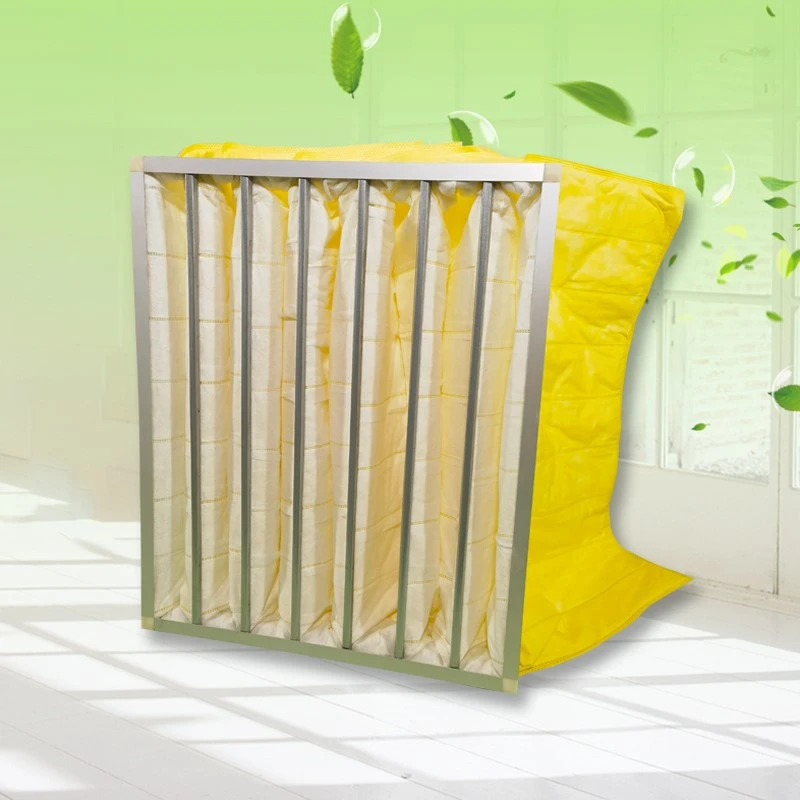
In locations with moderate airborne pollutants such as street‑side retail outlets, busy city‑centre commercial zones and high‑traffic public venues, suspended dust, pollen and airborne particles appear at higher concentrations. Contaminant‑interception speed accelerates. Ventilation resistance climbs faster and service life shrinks to roughly two‑to‑three months. Operators need to observe ventilation status closely and prepare for timely replacement.
For sites suffering heavy dust loads such as facilities adjacent to construction zones and open‑intake fresh‑air systems, airborne contaminant density is high. Filter bags reach saturation rapidly, compressing service life down to one‑to‑two months. Overdue operation under such conditions triggers excessive ventilation resistance, insufficient fresh‑air throughput and failed filtration. Not only will air‑cleaning functions disappear, but ventilation host units also bear heavier loads and consume extra energy.
Operating hours constitute another influencing factor. Twenty‑four‑hour continuous operation speeds up dust accumulation compared with daytime‑only running modes and shortens practical service cycles moderately. Users should not rely purely on time‑based schedules for replacement judgements. Practical operating conditions serve as more reliable references. Visible symptoms include reduced air‑outlet volume, degraded air‑exchange efficiency, weakened heating‑and‑cooling performance of air‑conditioning hardware and increased indoor dust deposition. These signals mean filter bags have achieved dust saturation and reached the end of service life. Timely replacement is required to secure stable system operation.


