


How To Simply Judge When The G4 Plate Air Filter Needs Replacement?
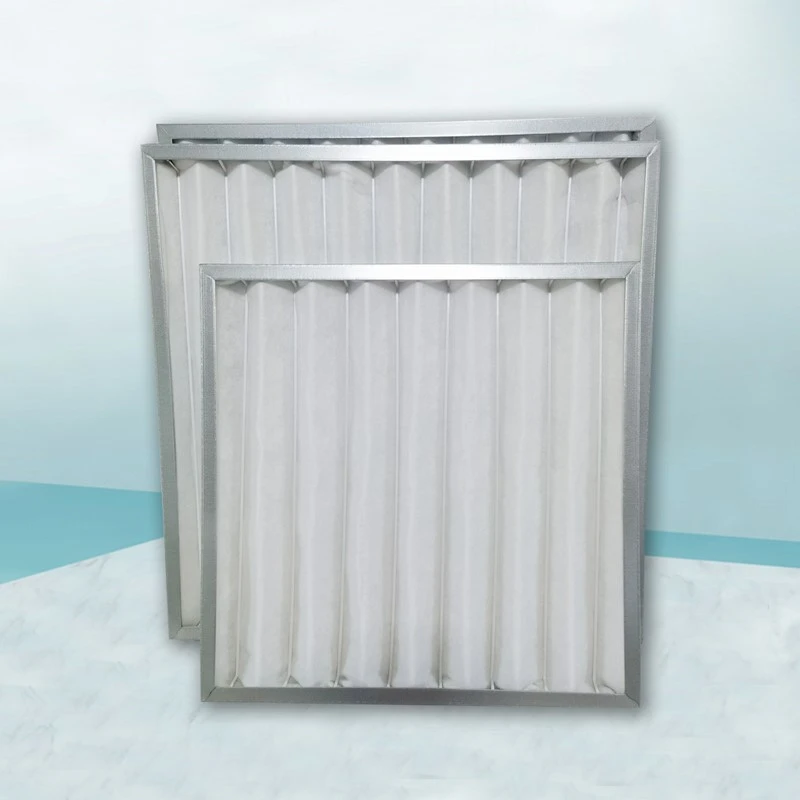
The G4 Plate Air Filter requires no professional instruments or technical inspection. You can quickly judge whether replacement is needed by naked-eye observation, equipment operating experience and indoor conditions. The checking method is simple and accessible for all users, suitable for commercial, residential and industrial ventilation scenarios. Below we elaborate universal and accurate self-inspection rules to avoid overusing clogged, failed filters that harm equipment and air quality. The most direct and fundamental judging method is visual observation of the filter appearance. A brand-new G4 Plate Air Filter has clean, translucent filter media in pure white or off-white color with evenly fluffy fibers free of impurity buildup and good light transmission. As operation proceeds, the filter gradually adsorbs dust, hair and floc contaminants. Slight graying or yellowing in the initial phase counts as normal wear and does not require replacement. Replacement becomes mandatory when large areas of the filter surface darken or turn grey, fully covered by floc and dust deposits. Fiber pores get fully blocked, the filter surface becomes dense and opaque, and dust accumulates heavily on edges and the central area with no clean filter media left. At this stage, filtration performance drops completely.
The second method relies on equipment operation and airflow perception, serving as a sensitive early warning indicator. Once the G4 filter clogs, ventilation resistance rises sharply and directly affects air supply performance. During daily use, if you notice that the air volume of central air conditioning, fresh air equipment or ventilation units decreases markedly. If airflow which used to be strong and wide-reaching becomes soft and weak, and air volume does not improve even after raising equipment gears, filter clogging blocking the air duct is highly likely. Some units may also produce slightly louder operating noise or unstable airflow due to abnormal air pressure caused by clogged filters. This typical sign of filter blockage and failure calls for immediate filter replacement to restore normal ventilation.
Lastly, indoor air and dust conditions can be used for reverse judgment based on real usage experience. When equipment runs normally and doors and windows are not blocked intentionally, if indoor air turns turbid again, floating particles that rarely appear with windows closed emerge, fine dust blows out from outlets, or dust accumulates rapidly on desktops and equipment surfaces within a short period, the current G4 Plate Air Filter has lost its capture capacity. Contaminants penetrate the filter and enter indoor spaces, meaning filtration function fails and replacement is required quickly.
You can also refer to service cycles for auxiliary judgment. In standard indoor ventilation and commercial settings, the service life of the G4 Plate Air Filter ranges from one to three months. In environments with heavy outdoor dust or continuous 24-hour operation, service life shortens to two to four weeks. Even if the filter surface is not fully clogged, fiber performance degrades and hidden clogging occurs after reaching the service cycle, reducing filtration and wind resistance performance significantly. Periodic replacement is recommended. In summary, any of the three conditions - heavy dust clogging on the filter, sharp air volume drop or dust return and turbid indoor air - signals the need for replacement. Timely replacement ensures smooth ventilation and clean air and protects downstream ventilation equipment effectively.