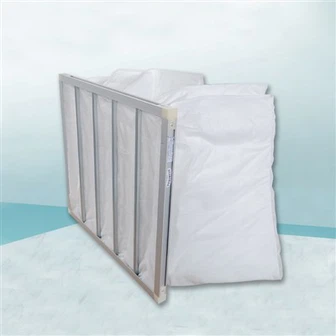
Can Primary Bag Filter Be Reused?


Unlike disposable panel filters, one core advantage of the Primary Bag Filter is its reusability, making it a top choice for industrial ventilation, central air conditioning, fresh air systems and other applications. Its reusability is not unlimited or unconditional, however; there are clear application limits and usage constraints. Forced repeated use will directly reduce air purification efficiency and even disrupt the normal operation of the entire ventilation unit.
First, under compliant, safe operating conditions, clean, dry and lightly contaminated Primary Bag Filters can be reused multiple times. Their filter bags are primarily made of premium non-woven and synthetic fiber materials. These fibers feature high toughness, strong deformation resistance, and excellent resistance to washing and air-drying. During routine operation, they only capture dry dust, lint and particulate pollutants with no oil stains, sticky residues or damp mildew growth. When equipment runs normally and only minor dust accumulates periodically, standardized cleaning methods - negative-pressure dust extraction, room-temperature water rinsing and natural air-drying - remove most dust trapped within filter bag pores and restore the air permeability and filtration performance of the filter media. After cleaning, the filter can be reinstalled for reuse. Under standard working conditions, it can generally be reused 2 to 3 times, greatly lowering consumable expenses for facility and equipment maintenance.
Second, filters must never be reused under the following circumstances. First, physical damage such as rips, broken stitching, deformation or slackening appears on filter bags. Even tiny cracks cause air and dust leakage during filtration, rendering the filter completely ineffective and making reuse pointless. Second, filter bags absorb sticky, wet contaminants including cooking fumes, water mist, glue dust and damp debris. These substances bind tightly to filter fibers and cannot be fully washed away. Residual contaminants breed bacteria, create unpleasant odors, harden filter media and permanently reduce air permeability. Third, filters run for extended periods without cleaning, leading to excessively thick dust layers and severe clogging. Ventilation resistance rises far above normal levels, and cleaning cannot restore original ventilation and filtration performance. Fourth, the operating environment is humid and poorly lit, resulting in mildew, black discoloration and microbial growth on filter bags. Reusing such filters causes secondary indoor air pollution.
In summary, the Primary Bag Filter is an extremely cost-effective reusable filtration consumable. It can be reused normally under dry, dust-free, intact and contamination-free operating conditions. If damage, severe clogging, oil stains or mildew develop, replace the filter promptly rather than forcing reuse. This ensures stable ventilation system operation and consistent qualified air filtration quality.