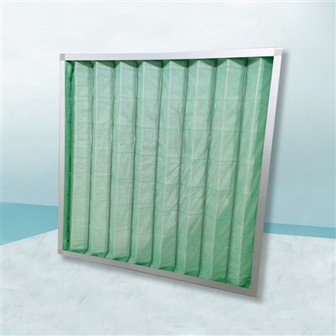
Can Primary Bag Filter Be Cleaned For Cyclic Reuse?
The Primary Bag Filter represents one of few primary‑grade air filters allowing water washing and cyclic reuse, unlike one‑shot panel filters and glass‑fiber filters. Its material and structural features make repeated service feasible. Proper cleaning and maintenance cut operation‑maintenance costs greatly, yet reuse is subject to clear preconditions and operating specifications, and not all filters are eligible for washing.
From the perspective of material and structure principle, the Primary Bag Filter is mainly composed of high‑strength polyester synthetic fiber and chemical‑fiber non‑woven fabric. Such materials feature high tensile strength, water‑washing resistance and corrosion resistance without breakage, delamination or fiber shedding after soaking. Firm stitching connects filter bags with outer frames securely to prevent bag detachment or cracking during washing, laying a solid foundation for cyclic utilization. By comparison,common primary panel filters use thin filter cotton and paper frames, which deform and break easily after water contact and cannot be reused.
Strict prerequisites apply to reusable filters. Only filters working in clean ventilation environments, intercepting dry particulates like dust, catkins and hair without oil contamination, chemical corrosion, mildew or severe clogging can be washed. With intact pores and undegraded fibers, these filters regain airflow rate and filtration efficiency after dust removal through washing and air‑drying. Normally they can be cleaned 2-3 times, effectively doubling overall service life.
Filters under the following conditions must be replaced directly instead of cleaning for reuse. First, filters contaminated by lampblack, grease or sticky particles. Grease sticks firmly to fiber gaps and cannot be eliminated completely by clean‑water washing. Residual grease causes bacterial growth and permanent pore blockage with rising air resistance. Second, filters with torn media, cracked bags, fiber shedding or deformed frames. Reinstallation will result in air leakage and filtration failure. Moreover, filters suffering severe mold, corrosive gas pollution, chemical dust contamination or fiber aging and hardening after long‑term operation possess no reuse value.
Standard cleaning procedures guarantee reuse performance. Use normal‑temperature clean water for low‑pressure flushing. High‑pressure water guns are forbidden to avoid fiber damage and bag deformation. Mild neutral detergent is acceptable for slight stains, while strong‑acid or alkali detergents shall never be applied to prevent media corrosion. Air‑dry naturally or under low‑pressure airflow after washing. Direct sunlight exposure and high‑temperature baking are prohibited to avoid fiber aging, hardening and shrinkage. Inspect filter integrity after thorough drying. Reinstall the filter only if no damage or residual stain is detected and air permeability remains normal.
Note that fibers will relax slightly after repeated washing, leading to a minor drop of filtration accuracy. Even if no obvious damage is observed after 2‑3 cleaning cycles, replacement is still recommended to secure purification effect of downstream filtration assemblies and stable indoor air quality.