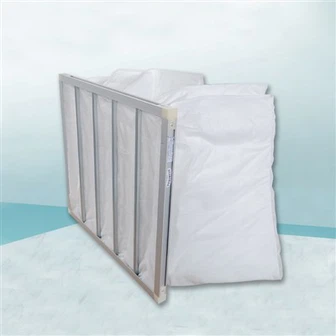
Daily Usage Precautions for Partitioned HEPA Filter
Purification performance and service life of Partitioned HEPA Filter are closely related to standardized installation, operation, maintenance and storage. To sustain stable high‑efficiency operation and avoid failures such as air leakage and filtration failure, operators should follow relevant specifications covering installation, operation, maintenance, replacement and storage.
For installation, inspect equipment before mounting. Verify whether model, filtration grade and dimension match working conditions, and check filter media integrity, partition shape and sealing strip condition to reject defective units. Never apply brute force during installation. Collision, extrusion and bending are forbidden to prevent filter‑medium cracking, partition displacement and frame deformation. Sealing is critical. Make close contact between the filter and duct or unit frame with intact sealing strips free of gaps. Air leakage will allow unfiltered dusty air to enter clean areas and nullify purification functions. Observe air‑inlet and air‑outlet marks strictly and reverse installation is prohibited.

During operation, stick to specified working parameters. Over‑rated air volume and excessive pressure difference are forbidden. Long‑term over‑load operation with large air volume and high negative pressure will exert excessive stress on filter media, deform partitions, accelerate clogging and aging, and even cause perforation to shorten service life significantly. Avoid harsh operating conditions. Long‑term operation under high humidity, condensation, strong corrosive gas and heavy oil fume is not allowed. Moisture causes paper‑made partitions to get damp, mildewed and broken. Corrosive gas erodes filter media and frames, and oil contaminants block micropores and degrade filtration efficiency. Maintain stable ventilation and avoid frequent start‑stop and sharp air‑volume fluctuation.
Regular inspection constitutes an essential maintenance measure. Monitor pressure difference across the filter periodically. Pressure‑difference change serves as a key indicator of dust accumulation. Rapid pressure‑difference rise indicates severe clogging requiring timely troubleshooting. Pre‑filters and medium‑efficiency filters must be arranged upstream to trap large‑size dust, floccules and debris, reduce dust burden on Partitioned HEPA Filter and extend its service life. Clear debris and accumulated dust inside air‑handling units on a regular basis to prevent secondary pollution.
Follow proper rules for replacement and storage. Never keep using expired filters. Micropores will be filled with dust after long‑time service, leading to declined efficiency and increased wind resistance. Expired filters may breed bacteria and trigger secondary pollution. Replace filters timely according to cleanliness conditions, service duration and pressure‑difference readings. Conduct replacement properly to prevent dust falling and contaminating clean zones. Spare uninstalled filters shall be stored in dry, ventilated and clean indoor spaces in horizontal or upright position. Stacking extrusion and damp mildew should be avoided, and dust‑proof packaging shall be kept intact to prevent premature dust contamination.
Furthermore, unauthorized disassembly and modification are prohibited. Alteration of partitions, filter media or frame structures will destroy air channels and structural stability and result in filtration failure. Shut down equipment for maintenance or replacement once damage, air leakage or abnormal pressure difference is detected during routine inspection to safeguard normal operation of the whole purification system.