


Applicable Places and Environments of F9 Pocket Air Filter
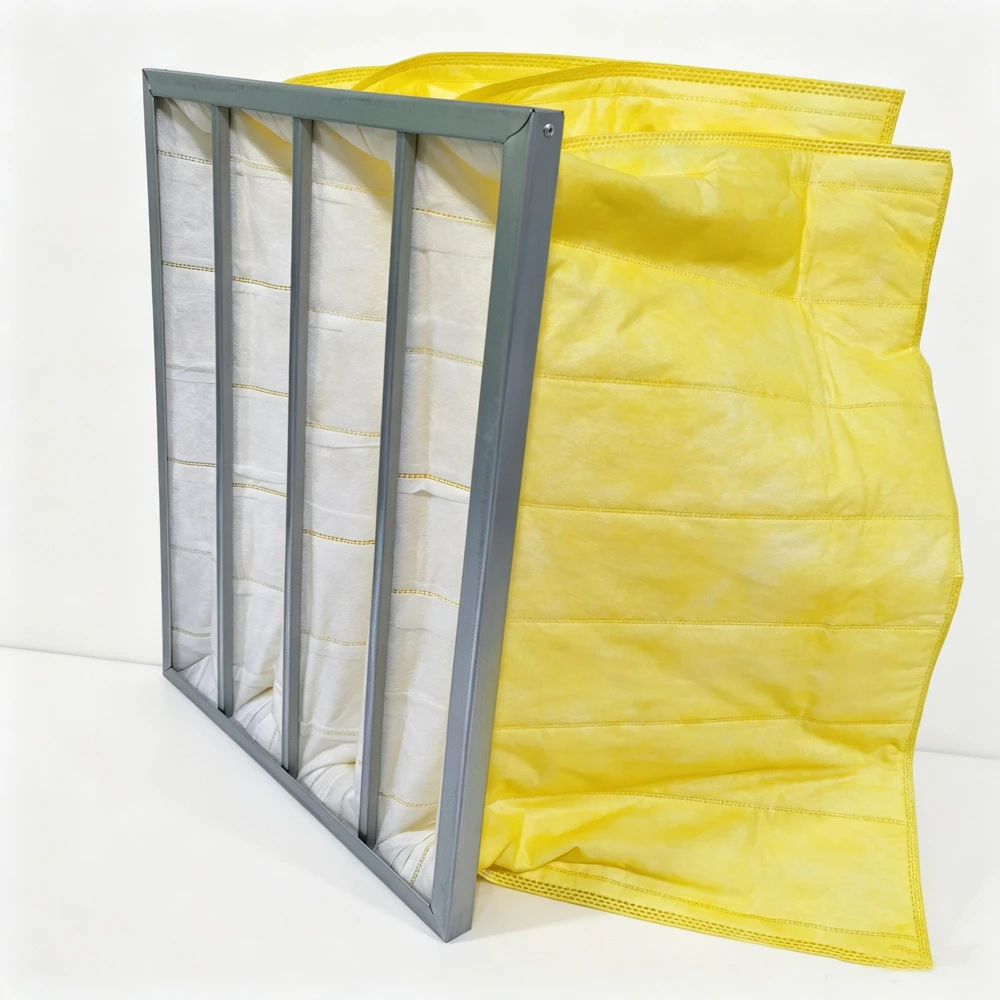
The F9 Pocket Air Filter is a core medium‑high efficiency filter consumable in heating, ventilation and air‑conditioning purification systems. Complying with European Standard EN779, its filtration grade sits between primary‑efficiency, medium‑efficiency and high‑efficiency filters. Positioned as a secondary intermediate filter, it covers a wide range of commercial, industrial, medical and scientific‑research air purification and ventilation scenarios. It suits conventional indoor ventilation conditions, but is not suitable for extreme working conditions involving high temperature, excessive humidity, strong corrosion, heavy dust or oil fume.
In commercial public buildings, it is a core matching component for central air‑conditioning ventilation systems in large‑scale office buildings, shopping centers, supermarkets, star‑rated hotels, exhibition centers and stadiums. These sites have dense human occupancy and large air circulation volumes. Outdoor dust and vehicle exhaust easily degrade indoor air quality. The F9 Pocket Air Filter effectively purifies supply air and improves indoor air quality. Meanwhile, it protects downstream air‑conditioning coils, fans and high‑efficiency filters from dust accumulation and wear, ensuring stable operation of ventilation systems.
For industrial clean production, it acts as the main secondary filter in clean workshops for electronic manufacturing, precision instrument processing, food‑and‑beverage production, cosmetic processing and packaging printing. Such workshops do not require ultra‑high cleanliness of Class 100 or Class 1000, yet they impose strict limits on airborne suspended particles and impurities to prevent dust‑induced product contamination and compromised production accuracy. The filter removes impurities from fresh air and return air to stabilize workshop air cleanliness. It meets the requirements of continuous industrial ventilation and high‑air‑volume filtration, delivering far better cost‑effectiveness than high‑efficiency filters.
Medical and scientific‑research facilities represent another major application area. It is installed in ventilation systems for ordinary wards, outpatient departments, hospital corridors and disinfection rooms (excluding ultra‑sterile zones), as well as general physical‑chemical laboratories, testing labs and research‑office buildings. It traps dust and flocculent substances to reduce bacterial carriers and improve medical‑office environments. It also shields experimental samples and testing equipment from dust pollution and guarantees accurate test results. Moreover, it serves as pre‑filtration for high‑efficiency filters in operating rooms and sterile wards to reduce the load on premium filtration equipment.
Furthermore, it is deployed in fresh‑air ventilation systems of large‑scale transportation hubs such as rail transit stations, airports and terminals, along with ventilation‑purification projects for various computer rooms and data centers. Its applicable operating conditions cover temperatures ranging from ‑10℃ to 60℃ and relative humidity no higher than 90% for dry indoor ventilation, with no strong acid, strong alkali, corrosive gas, or massive oil‑fume and particle impact. It is intended solely for regular air purification. Special modified filters shall be selected for harsh extreme working conditions.


