

What is the odor removal ability of an industrial HEPA filter?
Hey there! As a supplier of Industrial HEPA Filters, I often get asked about the odor removal ability of these filters. So, I thought I'd take some time to break it down for you all.
First off, let's understand what an Industrial HEPA Filter is. Industrial HEPA Filters, like the ones you can check out here, are designed to capture extremely small particles. They're a key part of many industrial air - purification systems. These filters are built to meet high - efficiency standards, capable of trapping at least 99.97% of particles that are 0.3 microns in diameter.

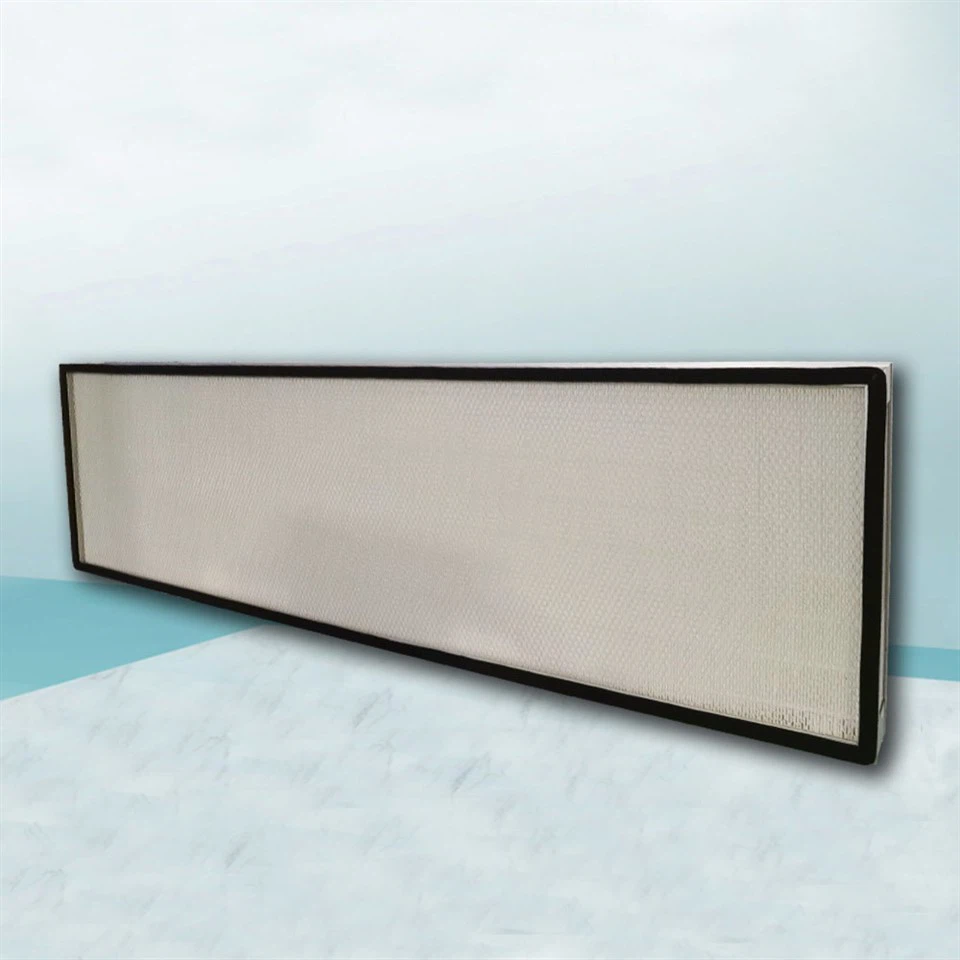
Now, when it comes to odor removal, it's a bit of a different ballgame compared to just particle filtration. Odors are usually caused by gaseous molecules, and HEPA filters aren't primarily designed to deal with them. HEPA filters work on a mechanical filtration principle. They have a dense web of fibers that physically block and capture particles as air passes through them. This is great for things like dust, pollen, mold spores, and even some bacteria and viruses. But odors are made up of much smaller, volatile organic compounds (VOCs) and other gaseous substances that can easily slip through the pores of a HEPA filter.
However, that doesn't mean Industrial HEPA Filters have zero role in odor - related situations. In some cases, the particles that carry odors can be captured. For example, if there's a smoky environment, the solid and liquid particles in the smoke that might be carrying the smoky odor can be trapped by the HEPA filter. So, it can reduce the intensity of the odor to some extent by removing the odor - carrying particles.
Let's say you're in a manufacturing plant where there's a lot of dust and a bit of a musty smell. The HEPA filter will do a great job of getting rid of the dust. And as it removes the dust particles that might be holding onto some of the musty odor, you'll notice a bit of an improvement in the air quality and a reduction in the odor.
But for more serious odor problems, you might need to combine a HEPA filter with other types of filtration technologies. One common approach is to use an activated carbon filter along with a HEPA filter. Activated carbon has a large surface area with lots of tiny pores. These pores can adsorb gaseous molecules, including those responsible for odors. When you have a system that has both a No Partition Air Filter (which could be a type of HEPA filter) and an activated carbon filter, the HEPA filter takes care of the larger particles, and the activated carbon filter deals with the odorous gases.
Another factor to consider is the quality and design of the HEPA filter. A well - made Aluminum Frame No Partition Filter can have better airflow and filtration efficiency. This means it can capture more particles effectively, which in turn can have a slightly better impact on odor reduction if the odors are associated with those particles.
The lifespan of an Industrial HEPA Filter also plays a role. As the filter gets clogged with particles over time, its efficiency can decrease. And if it's not replaced regularly, it might not be able to capture even the odor - carrying particles as well as it should. So, proper maintenance and timely replacement are crucial for getting the most out of the filter in terms of both particle and odor - related performance.
In industrial settings, the type of odor source matters a lot. For instance, in a food processing plant, the odors might be from food ingredients like spices or fruits. These odors are often associated with both particles (like fine spice powders) and gaseous compounds. The HEPA filter will handle the particle part, but for the pure gaseous odors, additional filtration is needed. In a chemical manufacturing plant, the odors are likely to be mostly from VOCs and other chemicals. Here, a HEPA filter alone won't be enough to deal with the strong chemical odors.
Now, if you're in an industrial environment and dealing with odor and particle problems, it's important to choose the right filtration solution. If you're looking for a high - quality Industrial HEPA Filter, we've got you covered. Our filters are designed to meet the highest industry standards and can be a great addition to your air - purification system. Whether you need to deal with just particles or want to take a step towards reducing odors as well, our filters can play a part.
If you're interested in learning more about how our Industrial HEPA Filters can work for your specific situation, or if you want to discuss combining them with other filtration technologies for better odor removal, we're here to help. Just reach out to us, and we can have a detailed chat about your requirements. We can work together to find the best solution for your industrial air - quality needs.
In conclusion, while Industrial HEPA Filters aren't the ultimate solution for odor removal on their own, they can contribute to odor reduction in certain scenarios by capturing odor - carrying particles. And when combined with other filtration methods, they can be part of a comprehensive approach to creating a clean and odor - free industrial environment.
So, don't hesitate to get in touch if you're thinking about upgrading your air - filtration system. We're always ready to assist you in making the right choice for your business.
References:
- "Air Filtration Technology Handbook" - Covers the principles of different air - filtration methods including HEPA filtration.
- "Industrial Air Quality Management" - Discusses the challenges and solutions for air quality in industrial settings.