

What is the difference between a Cleanroom HEPA Filter and a regular HEPA Filter?
Hey there! As a supplier of Cleanroom HEPA Filters, I often get asked about the difference between a Cleanroom HEPA Filter and a regular HEPA Filter. So, I thought I'd take a few minutes to break it down for you.
First off, let's start with the basics. HEPA stands for High-Efficiency Particulate Air. Both Cleanroom HEPA Filters and regular HEPA Filters are designed to trap tiny particles in the air, like dust, pollen, and smoke. They're both pretty good at what they do, but there are some key differences that set them apart.

Design and Construction
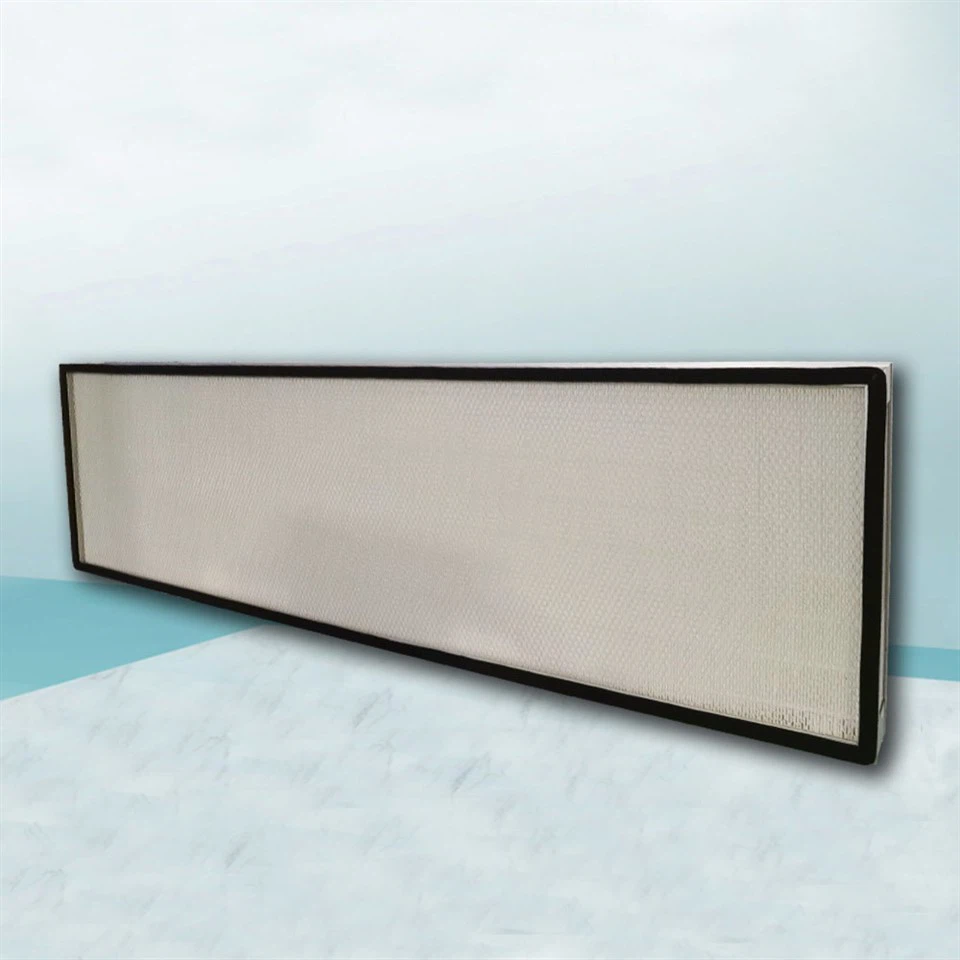
One of the biggest differences between Cleanroom HEPA Filters and regular HEPA Filters is their design and construction. Cleanroom HEPA Filters are built to meet much stricter standards than regular HEPA Filters. They're designed to be used in environments where even the tiniest particles can cause problems, like in a semiconductor manufacturing facility or a pharmaceutical cleanroom.
Cleanroom HEPA Filters are typically made with a more rigid frame and a denser filter media. The frame is usually made of aluminum or stainless steel, which provides better structural support and helps prevent the filter from collapsing under high air pressure. The filter media is also more tightly packed, which allows it to capture smaller particles more effectively.
On the other hand, regular HEPA Filters are designed for more general use. They're often used in home air purifiers, vacuum cleaners, and HVAC systems. Regular HEPA Filters usually have a less rigid frame and a less dense filter media. This makes them less expensive to manufacture, but it also means they're not as effective at capturing small particles as Cleanroom HEPA Filters.
Efficiency and Performance
Another key difference between Cleanroom HEPA Filters and regular HEPA Filters is their efficiency and performance. Cleanroom HEPA Filters are designed to meet a much higher standard of efficiency than regular HEPA Filters. They're typically rated to capture at least 99.97% of particles that are 0.3 microns in size or larger. This means that they're extremely effective at removing even the smallest particles from the air.
Regular HEPA Filters, on the other hand, are usually rated to capture at least 99.90% of particles that are 0.3 microns in size or larger. While this is still a very high level of efficiency, it's not quite as good as the efficiency of Cleanroom HEPA Filters.
In addition to their higher efficiency, Cleanroom HEPA Filters also have a longer lifespan than regular HEPA Filters. This is because they're designed to withstand higher air pressures and more frequent use. Cleanroom HEPA Filters can typically last for several years, while regular HEPA Filters may need to be replaced every few months.
Cost and Availability
Of course, all of these differences come at a cost. Cleanroom HEPA Filters are generally more expensive than regular HEPA Filters. This is because they're made with higher-quality materials and are subject to more rigorous testing and certification.
However, the cost of a Cleanroom HEPA Filter is often justified by its superior performance and longer lifespan. In a cleanroom environment, the cost of a single particle contamination event can be extremely high. By using a Cleanroom HEPA Filter, you can help prevent these events from occurring and save money in the long run.
Cleanroom HEPA Filters are also less widely available than regular HEPA Filters. This is because they're designed for a very specific market and are not typically sold in consumer stores. If you're looking for a Cleanroom HEPA Filter, you'll usually need to purchase it from a specialized supplier, like us.
Applications
So, when should you use a Cleanroom HEPA Filter, and when should you use a regular HEPA Filter? The answer depends on your specific application.
If you're working in a cleanroom environment, such as a semiconductor manufacturing facility, a pharmaceutical cleanroom, or a biotechnology laboratory, you'll definitely need to use a Cleanroom HEPA Filter. These environments require the highest level of air cleanliness, and a regular HEPA Filter simply won't cut it.
On the other hand, if you're looking for an air filter for your home or office, a regular HEPA Filter will probably be sufficient. Regular HEPA Filters are effective at removing dust, pollen, and other common allergens from the air, and they're much more affordable than Cleanroom HEPA Filters.
Our Cleanroom HEPA Filters
As a supplier of Cleanroom HEPA Filters, we offer a wide range of products to meet the needs of our customers. Our Cleanroom HEPA Filter is designed to meet the highest standards of quality and performance. It's made with a rigid aluminum frame and a dense filter media, which allows it to capture even the smallest particles from the air.
We also offer Aluminum Frame No Partition Filter and Industrial HEPA Filter. Our Aluminum Frame No Partition Filter is a cost-effective alternative to traditional partitioned filters, while our Industrial HEPA Filter is designed for use in industrial applications where high air flow and high efficiency are required.
If you're interested in learning more about our Cleanroom HEPA Filters or any of our other products, please don't hesitate to contact us. We'd be happy to answer any questions you may have and help you find the right filter for your application.
Conclusion
In conclusion, while both Cleanroom HEPA Filters and regular HEPA Filters are designed to remove particles from the air, there are some key differences between the two. Cleanroom HEPA Filters are built to meet much stricter standards than regular HEPA Filters, and they're designed for use in environments where even the tiniest particles can cause problems. They're more expensive and less widely available than regular HEPA Filters, but their superior performance and longer lifespan often justify the cost.
If you're working in a cleanroom environment, it's important to use a Cleanroom HEPA Filter to ensure the highest level of air cleanliness. If you're looking for an air filter for your home or office, a regular HEPA Filter will probably be sufficient.
Thanks for reading! If you have any questions or comments, please feel free to leave them below. And if you're interested in purchasing a Cleanroom HEPA Filter or any of our other products, please contact us to start the procurement negotiation.
References
- "High-Efficiency Particulate Air (HEPA) Filters," U.S. Environmental Protection Agency.
- "Cleanroom Technology: Principles and Design," by Peter W. Hesketh.
- "Air Filtration: An Introduction for Engineers," by Klaus Willeke and Paul A. Baron.