

What is the cost of customizing a Cleanroom HEPA Filter?
Customizing a Cleanroom HEPA Filter can be a game - changer for many businesses, especially those in industries where air quality is of utmost importance. As a Cleanroom HEPA Filter supplier, I've had my fair share of experiences dealing with clients who want a filter tailored to their specific needs. But what exactly goes into the cost of customizing these filters? Let's break it down.
Material Costs
The first and most obvious factor in the cost of customizing a Cleanroom HEPA Filter is the materials used. Different applications require different levels of filtration efficiency, and that directly impacts the choice of materials. High - efficiency filters often use advanced media that can capture particles as small as 0.3 microns with a very high efficiency rate.
The filter media itself can be quite pricey, especially if it's made from synthetic fibers or other high - performance materials. For instance, some custom filters might use a special type of glass fiber media that offers superior filtration capabilities but comes at a premium.
In addition to the media, the frame of the filter also contributes to the cost. You can choose from various frame materials like aluminum, stainless steel, or plastic. Aluminum frames are popular because they're lightweight and corrosion - resistant. If you're interested in an Aluminum Frame No Partition Filter, they offer a good balance between cost and performance. However, if you need a more durable frame for a harsh environment, stainless steel might be a better option, but it'll definitely bump up the price.
Design and Engineering
Customizing a filter isn't just about slapping some materials together. It requires a fair amount of design and engineering work. Every client has unique requirements in terms of size, shape, and airflow.
Our team of engineers has to take into account things like the pressure drop across the filter, which can affect the overall efficiency of the ventilation system. They'll also need to ensure that the filter fits seamlessly into the existing cleanroom setup. Calculating the correct pleat density and spacing is crucial for optimizing the filter's performance, and this involves a lot of technical know - how.
For more complex designs, like No Partition Air Filter, which are designed to maximize airflow and filtration area, the design and engineering process can be even more involved. This additional work means more man - hours spent on the project, and as you can imagine, that adds to the cost.
Testing and Certification
Once the filter is designed and manufactured, it has to go through rigorous testing to ensure it meets the required standards. Cleanroom HEPA filters are often used in industries such as pharmaceuticals, electronics manufacturing, and biotechnology, where air quality standards are extremely strict.
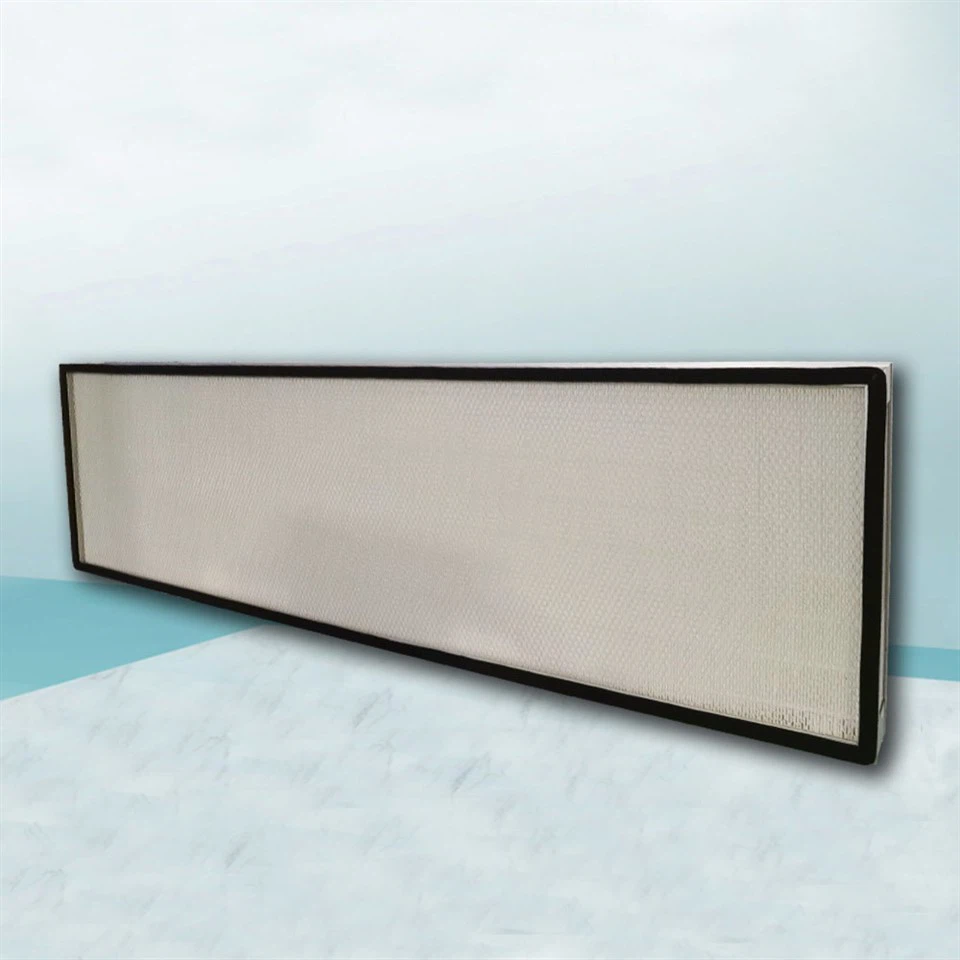

We perform a series of tests, including efficiency testing to measure how well the filter captures particles of different sizes. We also test for integrity to make sure there are no leaks in the filter. Only after the filter passes all these tests can it be certified for use in a cleanroom environment.
The cost of testing equipment, the time spent on testing, and the certification process itself all contribute to the overall cost of customization. If a client needs a filter that meets international standards like ISO 14644, the certification process can be even more intensive and expensive.
Quantity and Production Volume
The quantity of filters you order also plays a significant role in the cost. In general, the more filters you order, the lower the per - unit cost. This is because we can take advantage of economies of scale. When we produce a large volume of filters, we can negotiate better prices for raw materials with our suppliers, and the fixed costs of production, such as equipment setup and labor, can be spread over a larger number of units.
However, if you only need a small number of custom - made filters, the cost per unit will be higher. The setup costs for small - batch production are relatively high, and we don't have the same cost - saving opportunities as we do with large orders.
Special Features and Add - ons
Sometimes, clients need additional features or add - ons to their Cleanroom HEPA Filters. For example, you might want a filter with a pre - filter attached to it. A pre - filter can help extend the life of the main HEPA filter by capturing larger particles before they reach the HEPA media. This reduces the workload on the HEPA filter and can save you money on filter replacements in the long run.
Other special features could include water - resistant coatings for use in humid environments or fire - retardant materials for applications where fire safety is a concern. These add - ons come at an additional cost, but they can greatly enhance the performance and durability of the filter.
Conclusion
Customizing a Cleanroom HEPA Filter involves several factors that contribute to the overall cost. Material costs, design and engineering work, testing and certification, quantity, and special features all play a role. While the upfront cost of customization might seem high, it's important to consider the long - term benefits. A well - customized filter can improve air quality, increase the efficiency of your ventilation system, and reduce the risk of product contamination in a cleanroom environment.
If you're in the market for a customized Cleanroom HEPA Filter, don't hesitate to get in touch. We have the expertise and resources to help you design and manufacture the perfect filter for your specific needs. Contact us today to start a discussion about your requirements and get a personalized quote.
References
- ASHRAE (American Society of Heating, Refrigerating and Air - Conditioning Engineers) standards on air filtration
- ISO 14644 standards for cleanrooms and associated controlled environments