

What are the functions of a no partition hepa filter in a negative pressure room?
Hey there! As a supplier of no partition HEPA filters, I'm super excited to dive into the functions of these amazing filters in a negative pressure room. Let's get right into it!

1. Understanding Negative Pressure Rooms
First off, let's talk a bit about negative pressure rooms. These rooms are designed so that the air pressure inside is lower than the air pressure outside. This setup ensures that air flows into the room rather than out of it, which is crucial in environments like hospitals, laboratories, or industrial settings where you don't want contaminants to escape. For example, in a hospital isolation ward, a negative pressure room helps contain airborne pathogens and prevents them from spreading to other areas of the facility.
2. What is a No Partition HEPA Filter?
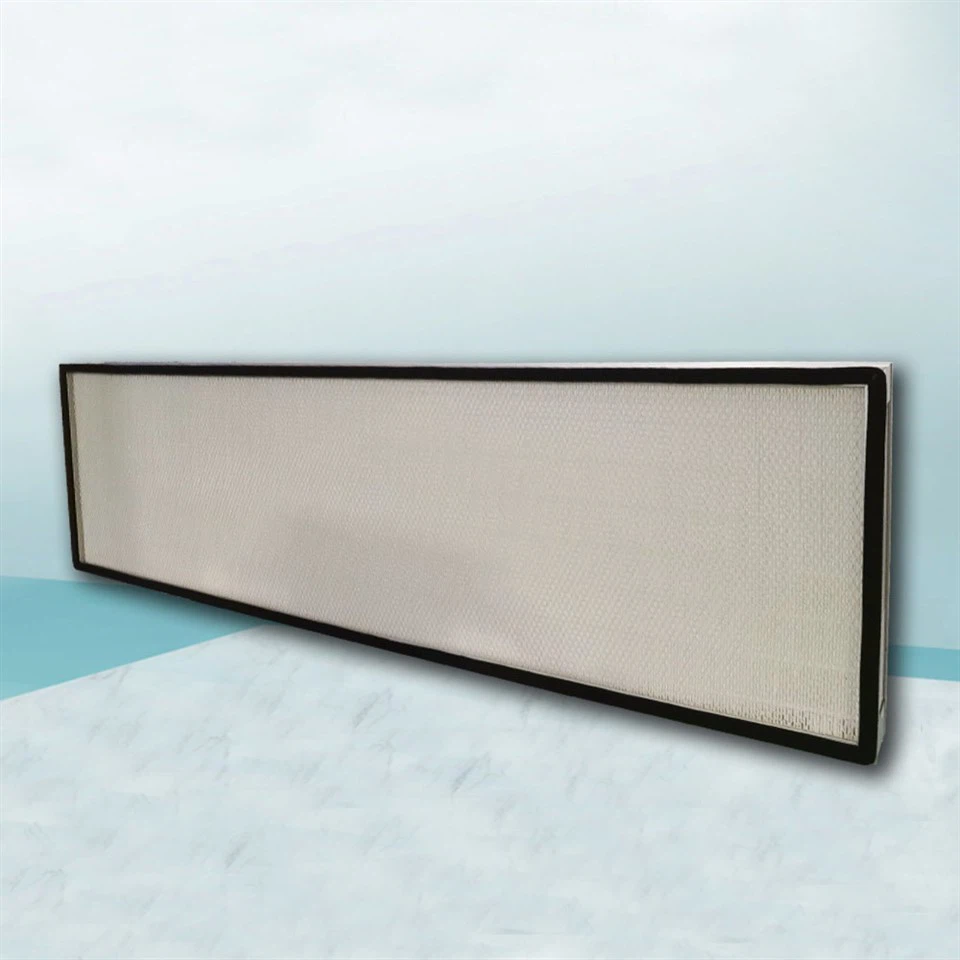
A no partition HEPA filter, as the name suggests, doesn't have the traditional partitions that you'd find in some other types of filters. Instead, it uses a continuous media design. This design allows for more filter media to be packed into a smaller space, increasing the filter's efficiency and capacity. These filters are highly effective at capturing tiny particles, and they're a popular choice for many applications, especially in negative pressure rooms. If you're interested in learning more about industrial applications, you can check out our Industrial HEPA Filter page.
3. Functions in a Negative Pressure Room
3.1 Particle Filtration
The primary function of a no partition HEPA filter in a negative pressure room is to filter out particles. These filters can capture particles as small as 0.3 microns with an efficiency of 99.97% or higher. That means they can trap all sorts of things, like dust, pollen, mold spores, bacteria, and even some viruses. In a hospital negative pressure room, this is essential for protecting patients and healthcare workers from airborne contaminants. For instance, in an operating room, the filter can remove any microscopic particles that could cause infections in patients.
3.2 Air Quality Improvement
By removing these particles, the no partition HEPA filter significantly improves the air quality inside the negative pressure room. Clean air is vital for the well - being of everyone in the room. In a laboratory setting, for example, where sensitive experiments are being conducted, clean air is necessary to prevent any interference from contaminants. The filter helps maintain a stable and clean environment, which is crucial for accurate results. You can find more details about our No Partition Air Filter and how it contributes to air quality improvement.
3.3 Containment of Contaminants
Since negative pressure rooms are designed to prevent the spread of contaminants, the no partition HEPA filter plays a key role in containing them. The filter captures the particles before they can escape the room. In a biohazard laboratory, this is extremely important. The filter ensures that any dangerous pathogens or chemicals that might be in the air are trapped, reducing the risk of exposure to people outside the room.
3.4 Pressure Balance
No partition HEPA filters also help maintain the pressure balance in a negative pressure room. The design of these filters allows for a relatively low pressure drop, which means that the air can flow through the filter without causing significant changes in the room's pressure. This is important because a stable pressure difference between the inside and outside of the room is necessary for the proper functioning of the negative pressure system.
3.5 Long - Term Cost Savings
Although no partition HEPA filters may have a higher upfront cost compared to some other filters, they offer long - term cost savings. Their high efficiency means that they need to be replaced less frequently. Also, since they help maintain a clean environment, they can reduce the risk of equipment damage and the need for expensive cleaning and disinfection procedures. Our Aluminum Frame No Partition Filter is a great example of a durable and cost - effective option.
4. Maintenance and Replacement
To keep the no partition HEPA filter working effectively in a negative pressure room, regular maintenance is required. This includes checking the filter's pressure drop, inspecting for any damage, and cleaning the filter housing if necessary. When the filter reaches its end - of - life, it should be replaced promptly. A clogged or damaged filter can reduce the filter's efficiency and may even affect the room's pressure balance.
5. Conclusion
In conclusion, no partition HEPA filters are essential components in negative pressure rooms. They offer a wide range of functions, from particle filtration and air quality improvement to containment of contaminants and pressure balance. If you're looking for a reliable and high - performance no partition HEPA filter for your negative pressure room, we're here to help. Whether you're in the healthcare, industrial, or laboratory sector, our filters can meet your needs.
If you're interested in purchasing our no partition HEPA filters or have any questions about our products, don't hesitate to get in touch with us. We're more than happy to discuss your requirements and provide you with the best solutions for your negative pressure room. Let's work together to create a cleaner and safer environment!
References
- "High - Efficiency Particulate Air (HEPA) Filters: Principles and Applications" - Journal of Environmental Health
- "Negative Pressure Isolation Rooms: Design and Operation" - American Society of Heating, Refrigerating and Air - Conditioning Engineers (ASHRAE)