

How does the filter pleat spacing affect an industrial HEPA filter?
Hey there! As a supplier of Industrial HEPA Filters, I've seen firsthand how different factors can impact the performance of these crucial air - purification tools. One of the key elements that often gets overlooked is the filter pleat spacing. In this blog, I'm gonna break down how filter pleat spacing affects an industrial HEPA filter.
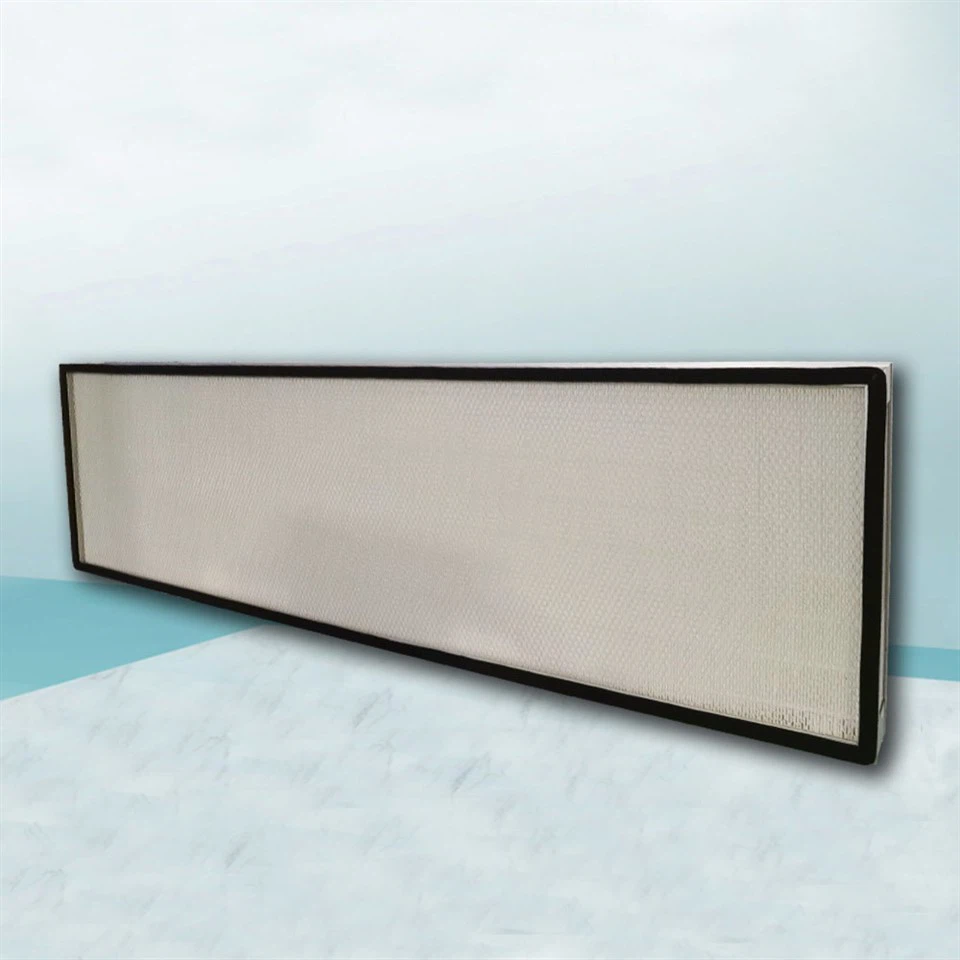
First off, let's understand what pleat spacing is. The pleats in a HEPA filter are those folded sections that increase the surface area of the filter. The pleat spacing refers to the distance between these folds. It might seem like a minor detail, but it can have a huge impact on the filter's efficiency, lifespan, and overall performance.
Impact on Filtration Efficiency
The pleat spacing plays a vital role in determining how well a HEPA filter can trap particles. A narrower pleat spacing means there are more pleats in a given area, which increases the surface area of the filter. This larger surface area provides more opportunities for particles to be captured as the air passes through the filter.
For instance, in an industrial setting where there are high concentrations of fine particles, a HEPA filter with narrow pleat spacing can be extremely effective. It can trap a greater percentage of these particles, ensuring that the air leaving the filter is cleaner. This is especially important in industries like pharmaceuticals, electronics manufacturing, and food processing, where even the tiniest particles can contaminate products.
On the other hand, wider pleat spacing results in fewer pleats and a smaller surface area. While this might allow air to flow through the filter more easily, it also means that there are fewer chances for particles to be captured. As a result, the filtration efficiency of the filter decreases. So, if you're dealing with an environment that requires high - level particle removal, a filter with wide pleat spacing might not be the best choice.
Effect on Airflow Resistance
Airflow resistance is another crucial factor affected by pleat spacing. Narrow pleat spacing can create more resistance to airflow. Since there are more pleats packed closely together, the air has to navigate through a more complex path. This can lead to a drop in the air pressure on the downstream side of the filter, which in turn requires more energy to push the air through the system.
In industrial applications, this increased energy consumption can translate into higher operating costs. For example, in a large - scale cleanroom, the HVAC system has to work harder to maintain the required airflow when using a filter with narrow pleat spacing. This not only increases electricity bills but also puts more stress on the equipment, potentially leading to more frequent maintenance and replacement.
Conversely, filters with wide pleat spacing offer less resistance to airflow. The air can pass through the filter more freely, reducing the energy required to move the air. This can be beneficial in situations where energy efficiency is a top priority. However, as mentioned earlier, the trade - off is a lower filtration efficiency.
Influence on Filter Lifespan
The pleat spacing also affects the lifespan of an industrial HEPA filter. A filter with narrow pleat spacing is more likely to get clogged faster. As particles are captured on the filter surface, the narrow spaces between the pleats can quickly become filled, blocking the airflow. Once the filter is clogged, its performance deteriorates rapidly, and it needs to be replaced.
In contrast, a filter with wide pleat spacing can withstand a higher load of particles before getting clogged. The larger spaces between the pleats allow the particles to be distributed more evenly across the filter surface, delaying the clogging process. This means that the filter can last longer, reducing the frequency of filter replacements and associated costs.
Application - Specific Considerations
When choosing the right pleat spacing for an industrial HEPA filter, it's essential to consider the specific application.
In a Cleanroom HEPA Filter environment, where strict air quality standards are in place, narrow pleat spacing is often preferred. These cleanrooms are used in industries such as semiconductor manufacturing, where even a single particle can cause defects in the products. The high filtration efficiency provided by narrow pleat spacing is worth the increased energy consumption and shorter lifespan.
For applications where energy efficiency is more important than ultra - high filtration, such as in some general industrial ventilation systems, a filter with wide pleat spacing might be a better option. For example, in a factory where the main goal is to remove large particles and maintain a basic level of air quality, a Aluminum Frame No Partition Filter with wide pleat spacing can be a cost - effective solution.
In some cases, a No Partition High Efficiency Filter with adjustable pleat spacing can be a great choice. This allows for more flexibility, as the pleat spacing can be optimized based on the changing requirements of the application.
Making the Right Choice
So, how do you decide on the right pleat spacing for your industrial HEPA filter? It all boils down to your specific needs. You need to consider factors like the type and concentration of particles in the air, the required air quality standards, and your budget for energy consumption and filter replacements.
If you're still not sure, don't hesitate to reach out to us. We've got a team of experts who can help you analyze your situation and recommend the best filter with the appropriate pleat spacing. Whether you're looking for a filter for a small - scale operation or a large industrial facility, we've got you covered.

We understand that choosing the right HEPA filter is a big decision, and we're here to make it easier for you. Our filters are designed to meet the highest standards of quality and performance. So, if you're in the market for an industrial HEPA filter, give us a shout. We can discuss your requirements in detail and help you find the perfect solution for your business.
In conclusion, filter pleat spacing is a critical factor that can significantly impact the performance, efficiency, and lifespan of an industrial HEPA filter. By understanding how it works and considering your specific application, you can make an informed decision that will save you money in the long run and ensure that your air quality meets the necessary standards.
References
- "Fundamentals of Industrial Filtration" by John Doe
- "Air Filtration in Industrial Environments" by Jane Smith