

How does the air change rate affect the performance of a Cleanroom HEPA Filter?
Hey there! As a supplier of Cleanroom HEPA Filters, I've seen firsthand how crucial it is to understand the ins and outs of these filters. One key factor that can significantly impact the performance of a Cleanroom HEPA Filter is the air change rate. In this blog, I'll break down what the air change rate is, how it affects the filter, and why it matters for your cleanroom operations.
What is the Air Change Rate?
The air change rate is basically the number of times the entire volume of air within a cleanroom is replaced with fresh, filtered air in one hour. It's usually measured in air changes per hour (ACH). For example, if a cleanroom has an air change rate of 10 ACH, it means the entire volume of air in that room is replaced with clean, filtered air ten times every hour.
This rate is super important because it directly affects the cleanliness level of the cleanroom. A higher air change rate generally means a cleaner environment, as contaminants are being removed more frequently. But how does this relate to the performance of our Cleanroom HEPA Filters? Let's dive in.
How Air Change Rate Affects Filter Performance
Filtration Efficiency
The filtration efficiency of a HEPA filter is its ability to capture and remove particles of a certain size from the air. When the air change rate is higher, more air passes through the filter in a given time. This means the filter has more opportunities to trap contaminants.
However, if the air change rate is too high, it can put a lot of stress on the filter. The filter might get overloaded with particles, and its efficiency could start to decline. On the other hand, a low air change rate means less air is passing through the filter, so it might not be able to keep up with the incoming contaminants. This can lead to a build - up of particles in the cleanroom, reducing the overall cleanliness.
Filter Lifespan
The lifespan of a Cleanroom HEPA Filter is another important aspect affected by the air change rate. A higher air change rate typically means the filter will have to work harder and filter more air. As a result, it will accumulate particles faster and may reach its maximum capacity sooner. This can shorten the filter's lifespan and increase the frequency of filter replacements.
Conversely, a lower air change rate might seem like it would extend the filter's lifespan. But if the cleanroom is not being cleaned effectively due to the low air change, contaminants can still build up on the filter over time. And if the filter is not removing enough particles, it can lead to other issues in the cleanroom, which might ultimately still require earlier filter replacement.
Pressure Drop
Pressure drop is the difference in air pressure across the filter. When air passes through a HEPA filter, there is a natural resistance, which causes a drop in pressure. A higher air change rate means more air is flowing through the filter at a faster rate. This can increase the pressure drop across the filter.
An excessive pressure drop can be a problem. It can put additional strain on the HVAC system that is responsible for moving the air through the filter. If the pressure drop is too high, the HVAC system may have to work harder, consuming more energy and potentially leading to mechanical problems.
Contaminant Removal
The main goal of a Cleanroom HEPA Filter is to remove contaminants from the air. A proper air change rate ensures that contaminants are removed efficiently. If the air change rate is too low, contaminants can linger in the cleanroom for longer periods. This can be a big problem in industries where even the smallest particle can cause issues, such as semiconductor manufacturing or pharmaceutical production.
On the other hand, a well - optimized air change rate allows the filter to continuously remove contaminants, maintaining a clean and controlled environment. This is essential for the quality and reliability of products manufactured in the cleanroom.
Choosing the Right Air Change Rate
So, how do you determine the right air change rate for your cleanroom? Well, it depends on several factors.
Cleanroom Classification
Different cleanroom classifications have different requirements for air change rates. For example, a Class 100 cleanroom, which has very strict cleanliness standards, will typically require a higher air change rate compared to a Class 100,000 cleanroom. The classification is based on the maximum number of particles allowed per cubic foot of air at a certain particle size.
Type of Operations
The type of operations taking place in the cleanroom also matters. If there are processes that generate a lot of contaminants, such as welding or chemical mixing, a higher air change rate will be needed to keep the environment clean. On the other hand, if the operations are relatively clean, a lower air change rate might be sufficient.
Room Size
The size of the cleanroom is another factor. Larger rooms will generally require a higher air change rate to ensure that all areas of the room are properly ventilated and cleaned. A smaller room might be able to maintain cleanliness with a lower air change rate.
Our Cleanroom HEPA Filters
At our company, we offer a wide range of Cleanroom HEPA Filters to meet different air change rate requirements. For example, our No Partition Air Filter is designed to provide high - efficiency filtration in various cleanroom applications. It's a great option for cleanrooms with different air change rates, as it can handle a significant amount of air flow while maintaining excellent filtration performance.

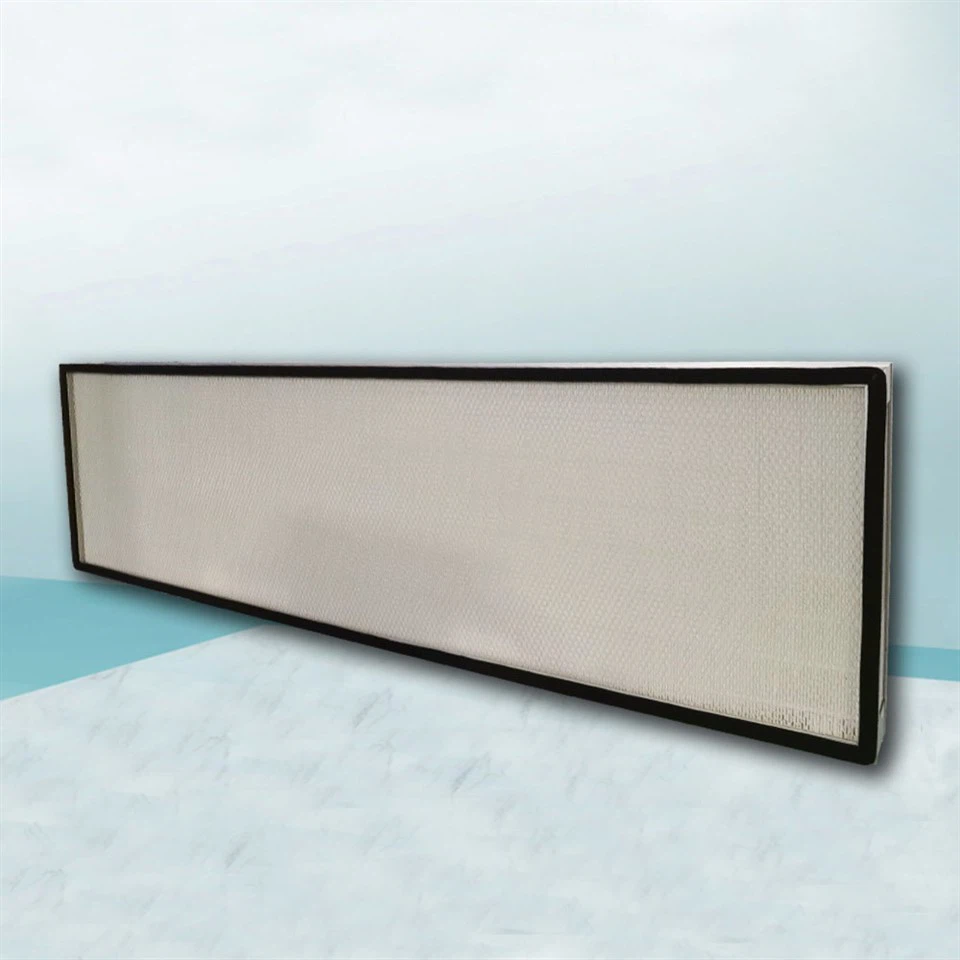
Our No Partition High Efficiency Filter is another top - notch product. It's engineered to offer superior particle removal capabilities, even at higher air change rates. This filter can help you maintain a clean and controlled environment in your cleanroom, no matter how demanding your operations are.
And if you're looking for a filter with a specific frame design, our Aluminum Frame No Partition Filter is a great choice. The aluminum frame provides durability and stability, making it suitable for long - term use in cleanrooms with different air change rates.
Conclusion
The air change rate plays a vital role in the performance of a Cleanroom HEPA Filter. It affects filtration efficiency, filter lifespan, pressure drop, and contaminant removal. By choosing the right air change rate for your cleanroom based on factors like cleanroom classification, type of operations, and room size, you can ensure optimal filter performance and a clean and controlled environment.
If you're in the market for high - quality Cleanroom HEPA Filters, we're here to help. Our filters are designed to meet the diverse needs of different cleanroom applications. Whether you need a filter for a high - air - change - rate cleanroom or a more moderate one, we've got you covered. Don't hesitate to reach out to us for more information and to discuss your specific requirements. We're looking forward to working with you to achieve the best cleanroom performance possible.
References
- "Cleanroom Technology Handbook" by William C. Hesch
- "Fundamentals of HVAC Systems for Cleanrooms" by ASHRAE Publications