

How does a high efficiency air filter compare to a carbon air filter?
How does a high efficiency air filter compare to a carbon air filter?
As a supplier of High Efficiency Air Filters, I often get asked about the differences between high efficiency air filters and carbon air filters. Both types of filters play crucial roles in air purification, but they have distinct characteristics, functions, and applications. In this blog, I'll delve into a detailed comparison of these two types of air filters to help you make an informed decision when it comes to choosing the right one for your needs.

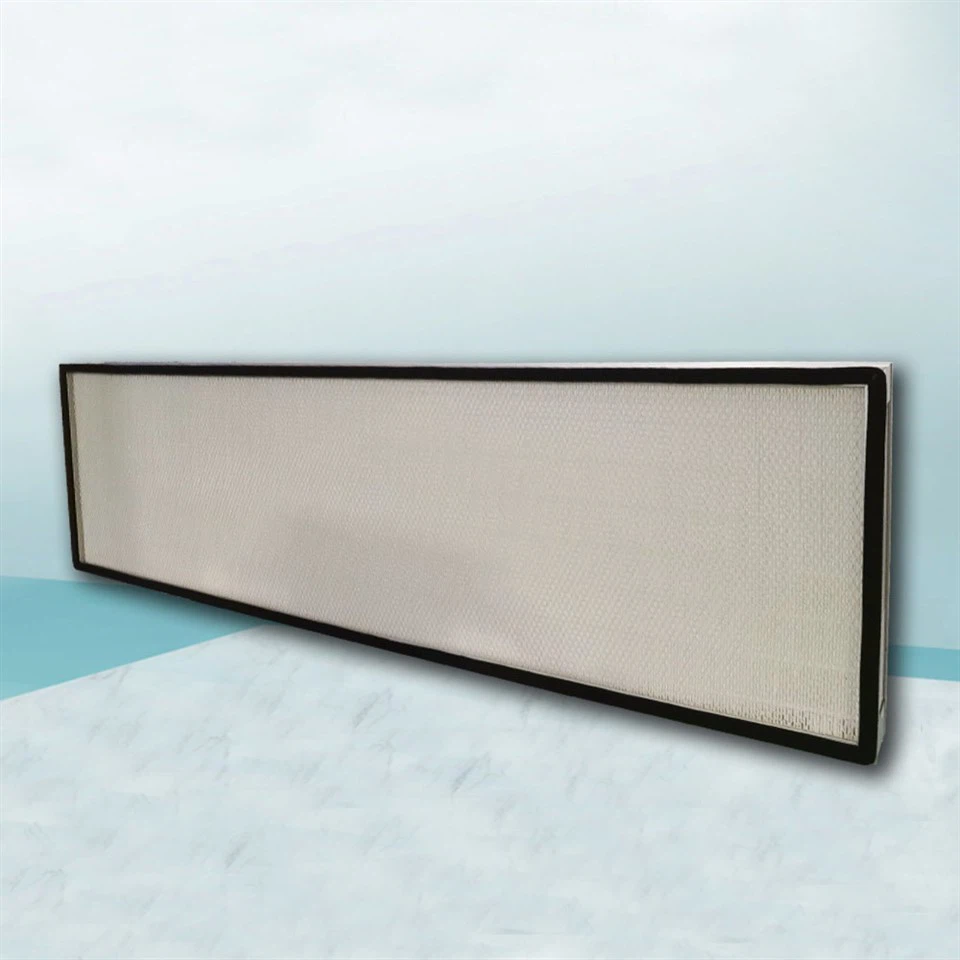
1. Working Principles
High efficiency air filters, such as High Efficiency Air Filter, typically operate based on the principle of mechanical filtration. These filters are designed with a dense matrix of fibers that trap particles as air passes through them. The most well - known type of high efficiency air filter is the HEPA (High - Efficiency Particulate Air) filter. HEPA filters can capture at least 99.97% of particles that are 0.3 microns in diameter. The filtration mechanism involves three main processes: interception, impaction, and diffusion. Larger particles are intercepted when they come into contact with the filter fibers, medium - sized particles are impacted onto the fibers due to their inertia, and smaller particles are diffused onto the fibers through random motion.
On the other hand, carbon air filters work primarily through adsorption. Activated carbon, which is the key component of these filters, has a highly porous structure. The pores in the activated carbon provide a large surface area for molecules to adhere to. When air containing gaseous pollutants, odors, and volatile organic compounds (VOCs) passes through the carbon filter, these contaminants are attracted to and held on the surface of the carbon pores.
2. Particle Filtration Efficiency
High efficiency air filters excel in removing solid and liquid particles from the air. For instance, Industrial HEPA Filter is widely used in industrial settings to capture dust, pollen, mold spores, bacteria, and even some viruses. These filters can achieve very high levels of particle removal efficiency, making them ideal for environments where clean air is of utmost importance, such as hospitals, laboratories, and semiconductor manufacturing facilities.
Carbon air filters, however, are not designed for particle filtration. Their main focus is on removing gaseous contaminants. While they may trap some larger particles as a secondary effect, their particle removal efficiency is significantly lower compared to high efficiency air filters. If your main concern is getting rid of visible dust or microscopic particulate matter in the air, a high efficiency air filter is the better choice.
3. Gas and Odor Removal
Carbon air filters are the go - to option when it comes to removing gases, odors, and VOCs from the air. They can effectively adsorb chemicals such as formaldehyde, benzene, and toluene, which are commonly found in indoor air from sources like furniture, paints, and cleaning products. In environments where there are strong odors, such as kitchens, smoking areas, or industrial facilities with chemical emissions, carbon air filters can significantly improve the air quality by reducing the concentration of these unpleasant and potentially harmful gases.
High efficiency air filters have little to no effect on gaseous contaminants. Since their filtration mechanism is based on mechanical trapping of particles, they cannot adsorb or break down gases and odors. So, if you are dealing with a problem related to bad smells or gaseous pollution, a carbon air filter should be considered.
4. Lifespan and Maintenance
The lifespan of a high efficiency air filter depends on several factors, including the level of particulate matter in the air and the airflow rate. In general, these filters need to be replaced periodically. For example, in a moderately polluted indoor environment, a high efficiency air filter may need to be replaced every 6 - 12 months. When the filter becomes clogged with particles, the airflow through the filter is restricted, which can reduce the efficiency of the air purification system and increase energy consumption.
Carbon air filters also have a limited lifespan. The adsorption capacity of activated carbon is finite, and once it is saturated with contaminants, it loses its effectiveness. The lifespan of a carbon air filter can vary depending on the concentration of gaseous pollutants in the air. In a highly polluted environment, a carbon air filter may need to be replaced every 3 - 6 months. Regular replacement of both types of filters is essential to ensure optimal performance.
5. Cost
The cost of high efficiency air filters can vary depending on their size, efficiency rating, and construction. Generally, high - quality high efficiency air filters, especially those with advanced features and high filtration ratings, can be relatively expensive. However, considering their long - term benefits in terms of improved air quality and protection of sensitive equipment, the investment is often worthwhile.
Carbon air filters also come in a range of prices. The cost is mainly determined by the amount and quality of the activated carbon used. In some cases, carbon air filters can be more affordable upfront, but the need for frequent replacement can add up to significant costs over time.
6. Applications
High efficiency air filters are used in a wide variety of applications. In addition to the previously mentioned hospitals and laboratories, they are also used in cleanrooms for electronics manufacturing, pharmaceutical production, and food processing. Aluminum Frame No Partition Filter is a type of high efficiency air filter that is popular in industrial applications due to its lightweight and durable aluminum frame.
Carbon air filters are commonly used in air purifiers for homes and offices to remove odors and gaseous pollutants. They are also used in industrial settings, such as chemical plants and wastewater treatment facilities, to control emissions of harmful gases.
In many cases, a combination of high efficiency air filters and carbon air filters can be used to achieve comprehensive air purification. For example, in an air purification system, a high efficiency air filter can be placed upstream to remove particles, and a carbon air filter can be placed downstream to remove gases and odors.
In conclusion, both high efficiency air filters and carbon air filters have their unique advantages and are suitable for different air purification needs. If your main goal is to remove particles from the air, a high efficiency air filter is the best choice. If you are dealing with gaseous pollutants and odors, a carbon air filter is more appropriate. And for the most comprehensive air purification, using both types of filters in combination can provide the best results.
If you are interested in learning more about our High Efficiency Air Filter products or have any questions regarding air purification solutions, please feel free to reach out for a procurement discussion. We are here to help you find the most suitable air filter for your specific requirements.
References
- Brown, R. C. (2000). Air Filtration: An Integrated Approach to the Theory and Application of Fibrous Filters. Pergamon.
- Seinfeld, J. H., & Pandis, S. N. (2006). Atmospheric Chemistry and Physics: From Air Pollution to Climate Change. Wiley.
- Hinds, W. C. (1999). Aerosol Technology: Properties, Behavior, and Measurement of Airborne Particles. Wiley - Interscience.