

Are there different types of no partition hepa filters?
Hey there! As a supplier of no partition HEPA filters, I often get asked if there are different types of these filters. Well, the answer is a big yes! In this blog, I'll break down the various types of no partition HEPA filters, their features, and where they're best used.
What are No Partition HEPA Filters?
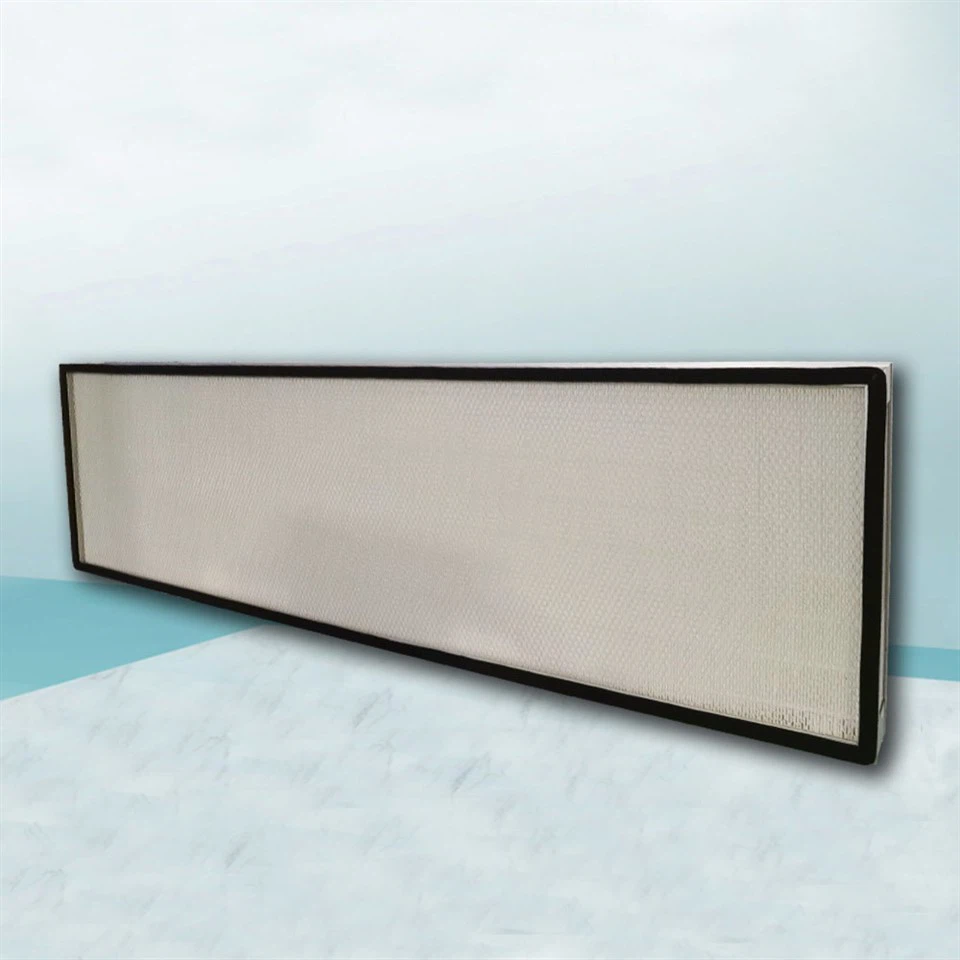
First off, let's quickly go over what no partition HEPA filters are. HEPA stands for High-Efficiency Particulate Air. These filters are designed to trap at least 99.97% of particles that are 0.3 microns in diameter. No partition HEPA filters, as the name suggests, don't have the traditional partitions that you'd find in some other types of filters. Instead, they use a continuous media, which allows for a larger filtration area and better airflow.
Different Types of No Partition HEPA Filters
1. Aluminum Frame No Partition Filter
One of the most common types is the Aluminum Frame No Partition Filter. These filters have an aluminum frame, which makes them lightweight yet durable. Aluminum is resistant to corrosion, so these filters can last a long time, even in harsh environments.
The aluminum frame also provides good structural support for the filter media. This is important because the filter media needs to be held in place properly to ensure efficient filtration. These filters are often used in commercial and industrial settings, such as cleanrooms, hospitals, and laboratories. They can handle high airflow rates and are great at removing dust, pollen, and other airborne particles.
2. No Partition Air Filter
The No Partition Air Filter is a more general term that can refer to a variety of no partition HEPA filters. These filters are designed to improve air quality by removing contaminants from the air. They can be used in a wide range of applications, from residential HVAC systems to automotive air filters.
No partition air filters are known for their high efficiency and low pressure drop. This means that they can filter a large amount of air without causing too much resistance to the airflow. As a result, they can save energy and reduce the load on the HVAC system. They're also relatively easy to install and maintain, making them a popular choice for many consumers.
3. No Partition High Efficiency Filter
The No Partition High Efficiency Filter is designed to provide the highest level of filtration. These filters are often used in critical applications where air quality is of utmost importance, such as in semiconductor manufacturing facilities and pharmaceutical cleanrooms.
No partition high efficiency filters are made with a special filter media that has a very high density of fibers. This allows them to trap even the smallest particles, including bacteria and viruses. They also have a high dust holding capacity, which means that they can operate for a longer time before needing to be replaced. However, they can be more expensive than other types of no partition HEPA filters due to their advanced technology.
Factors to Consider When Choosing a No Partition HEPA Filter
When choosing a no partition HEPA filter, there are several factors you need to consider.
1. Filtration Efficiency
The filtration efficiency is one of the most important factors. It's measured by the percentage of particles that the filter can remove from the air. As mentioned earlier, HEPA filters are required to remove at least 99.97% of particles that are 0.3 microns in diameter. However, some filters may have a higher efficiency, especially the high efficiency ones.

2. Airflow Rate
The airflow rate is another important factor. You need to choose a filter that can handle the airflow rate of your HVAC system or application. If the airflow rate is too high for the filter, it may cause the filter to clog quickly and reduce its lifespan. On the other hand, if the airflow rate is too low, the filter may not be able to provide adequate filtration.
3. Size and Dimensions
Make sure to choose a filter that fits your equipment properly. The size and dimensions of the filter should match the specifications of your HVAC system or the application where it will be used. A filter that is too large or too small may not work effectively and could cause problems with the airflow.
4. Cost
Cost is always a consideration. While high efficiency filters may provide better filtration, they can also be more expensive. You need to balance the cost with the performance and the specific requirements of your application. Sometimes, a less expensive filter may be sufficient for your needs.
Conclusion
In conclusion, there are definitely different types of no partition HEPA filters, each with its own unique features and applications. Whether you need an aluminum frame no partition filter for a commercial setting, a no partition air filter for your home, or a no partition high efficiency filter for a critical application, there's a filter out there for you.
If you're in the market for no partition HEPA filters, I'd love to help you find the right one for your needs. Just reach out to me, and we can have a chat about your requirements. I'm here to make sure you get the best filter at the best price.
References
- "High-Efficiency Particulate Air (HEPA) Filters: A Technical Overview" by the American Society of Heating, Refrigerating and Air-Conditioning Engineers (ASHRAE)
- "Air Filtration Basics" by the Filter Manufacturers Council (FMC)