

Are high efficiency air filters effective against volatile organic compounds (VOCs)?
As a supplier of high efficiency air filters, I often get asked about the effectiveness of these filters against volatile organic compounds (VOCs). It's a crucial question, especially considering the increasing concerns about indoor air quality and the potential health risks associated with VOCs. In this blog, I'll delve into the science behind high efficiency air filters and their ability to tackle VOCs.
Understanding Volatile Organic Compounds (VOCs)
VOCs are a group of chemicals that have high vapor pressures at normal room temperature. This means they can easily evaporate into the air, where they can be inhaled and cause a variety of health problems. Common sources of VOCs in indoor environments include paints, solvents, cleaning products, pesticides, and building materials. Exposure to high levels of VOCs can lead to short - term symptoms such as headaches, dizziness, and eye, nose, and throat irritation. Long - term exposure may also increase the risk of more serious health issues like cancer and damage to the liver, kidneys, and central nervous system.
How High Efficiency Air Filters Work
High efficiency air filters, such as High Efficiency Particulate Air (HEPA) filters, are designed to capture small particles from the air. These filters typically use a dense mat of fibers to trap particles as air passes through them. The efficiency of a HEPA filter is defined by its ability to capture particles of a certain size. For example, a true HEPA filter can capture at least 99.97% of particles that are 0.3 microns in diameter.
The mechanism of particle capture in high efficiency air filters involves three main processes: interception, impaction, and diffusion. Interception occurs when a particle follows the air stream and comes into contact with a fiber in the filter. Impaction happens when a larger particle is too large to follow the air stream around a fiber and collides with it. Diffusion is the process by which very small particles move randomly and collide with the filter fibers.
Effectiveness Against Particulate Matter vs. VOCs
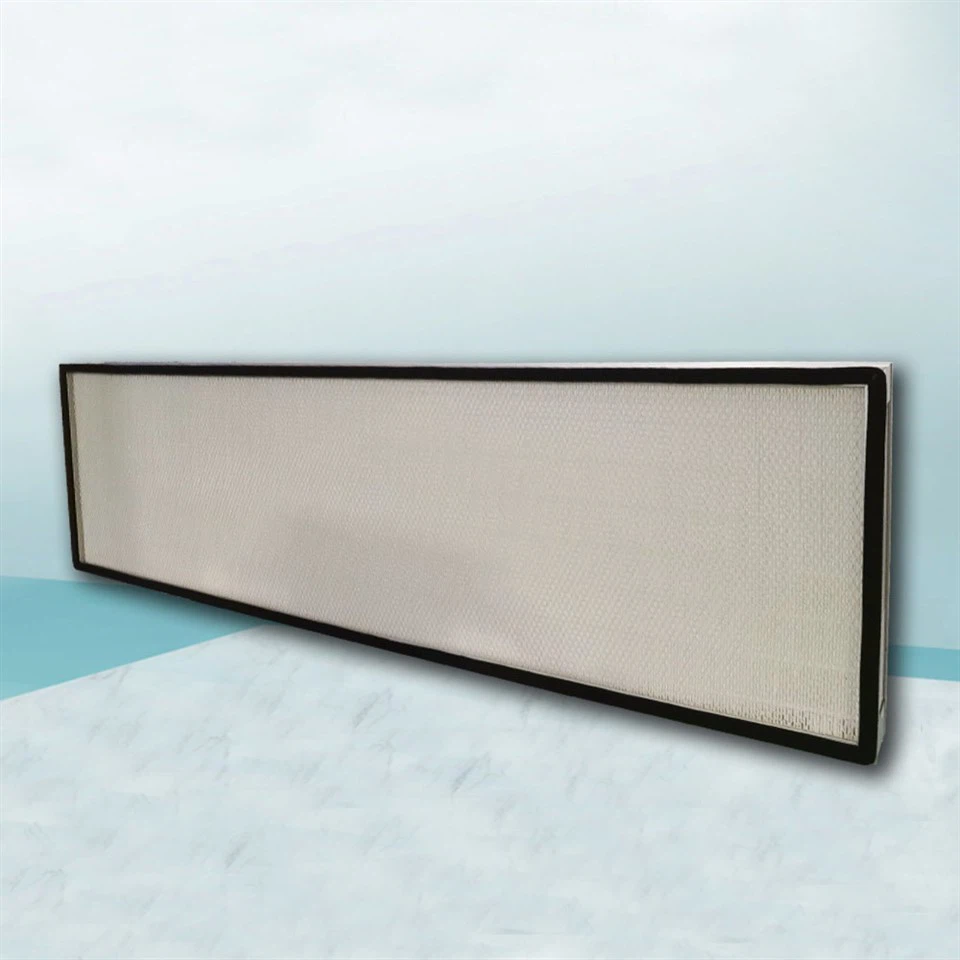
When it comes to particulate matter, high efficiency air filters are extremely effective. They can significantly reduce the concentration of dust, pollen, mold spores, and other solid or liquid particles in the air. However, VOCs are a different story. VOCs are gaseous compounds, not particles. The traditional high efficiency air filters, like the Industrial HEPA Filter, which are designed for particulate removal, do not have the ability to directly capture VOCs.
The fibers in a high efficiency air filter are simply not structured to trap gaseous molecules. VOC molecules are much smaller than the particles that these filters are designed to capture, and they do not interact with the filter fibers in the same way as solid or liquid particles. So, while a high efficiency air filter can make a big difference in reducing visible dust and some allergenic particles in the air, it won't directly remove VOCs.
Enhanced High Efficiency Air Filters for VOC Removal
Although standard high efficiency air filters are not effective against VOCs, there are enhanced versions that can help. Some high efficiency air filters are combined with activated carbon or other adsorbent materials. Activated carbon has a large surface area with many tiny pores that can adsorb gaseous molecules, including VOCs.
When air passes through an air filter that contains activated carbon, the VOC molecules are attracted to the surface of the carbon and become trapped. This combination of a high efficiency particulate filter and an activated carbon component can address both particulate matter and VOCs in the air. For example, the No Partition Air Filter can be customized with an activated carbon layer to provide a more comprehensive air purification solution.
Factors Affecting VOC Removal Efficiency
Even with the addition of activated carbon, the effectiveness of high efficiency air filters against VOCs can be influenced by several factors. One of the key factors is the type of VOCs. Different VOCs have different chemical properties, and some are more easily adsorbed by activated carbon than others. For example, larger and more polar VOC molecules tend to be adsorbed more readily than smaller and non - polar ones.
The amount of activated carbon in the filter also matters. A filter with a larger amount of activated carbon will generally have a higher capacity to adsorb VOCs. Additionally, the flow rate of air through the filter is important. If the air flows too quickly through the filter, the VOC molecules may not have enough time to be adsorbed by the activated carbon.
Real - World Applications
In industrial settings, where VOC emissions can be high, the use of appropriate high efficiency air filters is crucial. For example, in paint - spraying facilities or chemical manufacturing plants, the [Aluminum Frame No Partition Filter](https://www.al.com/high - efficiency - particulate - air - filter/no - partition - hepa - filter/aluminum - frame - no - partition - filter.html) with an activated carbon layer can help reduce the concentration of VOCs in the air, protecting the health of workers and improving the overall air quality in the workplace.
In residential settings, VOCs can also be a concern, especially in newly renovated homes or homes with a lot of synthetic materials. Installing a high efficiency air filter with VOC - removal capabilities in the home's HVAC system can help create a healthier living environment.
Conclusion
In summary, standard high efficiency air filters are highly effective at removing particulate matter from the air but are not directly effective against VOCs. However, by incorporating activated carbon or other adsorbent materials, these filters can be enhanced to provide some level of VOC removal. The effectiveness of VOC removal depends on various factors such as the type of VOCs, the amount of adsorbent material, and the air flow rate.

If you're concerned about both particulate matter and VOCs in your indoor environment, it's important to choose the right high efficiency air filter. As a supplier of high efficiency air filters, I can offer a range of products that can be tailored to your specific needs. Whether you're looking for a solution for an industrial facility or a residential home, I'm here to help you make the best choice.
If you're interested in learning more about our high efficiency air filters and their VOC - removal capabilities, or if you'd like to discuss a potential purchase, please feel free to reach out. I'm more than happy to have a detailed conversation with you about your air purification requirements.
References
- Indoor Air Quality Association. (2023). Volatile Organic Compounds (VOCs) in Indoor Air.
- American Society of Heating, Refrigerating and Air - Conditioning Engineers (ASHRAE). (2022). Standards for Air Filtration in Buildings.
- Environmental Protection Agency (EPA). (2021). Indoor Air Quality and VOCs.